
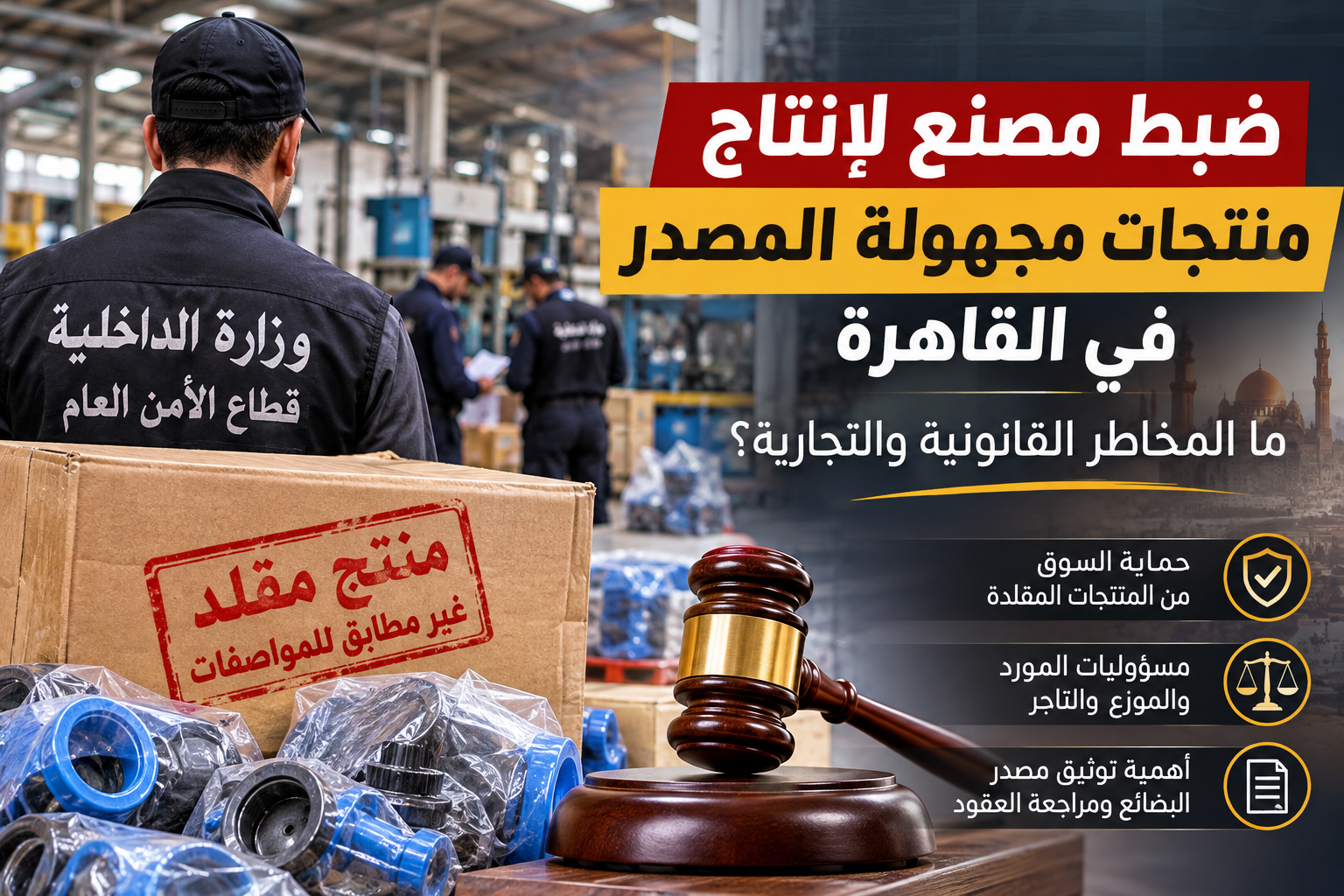
Unlicensed Factory Manufacturing Unknown-Origin Water-Pump Components Discovered in Cairo#
In a recent regulatory enforcement operation targeting commercial fraud and market deception, Egypt's Ministry of Interior announced the discovery of an unlicensed factory operating in the El Marg district of Cairo. The facility was reportedly involved in manufacturing water-pump components of unknown origin, intended for distribution in the market.
According to the official statement issued on November 1, 2026, the authorities seized:
75 water-pump components bearing counterfeit and imitation trademarks.
200 kilograms of raw materials of unknown origin.
950 counterfeit labels.
A complete production line.
The Ministry confirmed that legal procedures had been initiated in connection with the incident.
The case highlights a significant commercial risk: products of unknown origin or carrying counterfeit trademarks can move from unauthorized manufacturing facilities into distribution networks, wholesale markets, and retail channels.
What Does This Incident Mean for Importers and Suppliers?#
The commercial risks do not necessarily end with the discovery of an unauthorized factory or the seizure of products at the manufacturing site. They may extend to businesses dealing with unreliable suppliers or relying on insufficient documentation to verify the origin of purchased goods.
For example, a trading company may purchase products from a local supplier or intermediary and redistribute them to wholesalers and retailers before discovering that the products carry counterfeit trademarks or lack reliable documentation proving their origin.
In such circumstances, businesses may face several challenges, including:
Suspension of sales involving the products under investigation or seizure.
Disruption of supply agreements involving the affected products.
Disputes with suppliers over product origin and conformity.
Claims from customers or distributors concerning previously supplied goods.
Financial losses associated with storage, replacement shipping, and lost sales.
Potential legal proceedings depending on the nature of the violation, each party's involvement, and whether liability is established.
It is important to distinguish between purchasing products in good faith and knowingly participating in unlawful activities. Legal liability is not automatically established simply because a commercial relationship exists. It depends on the facts, available evidence, and applicable legal provisions.
How Are Suppliers, Distributors, and Buyers Affected?#
First: Suppliers and Manufacturers
The origin of products is a fundamental factor in assessing the reliability of commercial transactions.
A supplier who provides products without clear documentation establishing their origin, or who submits inaccurate information regarding trademarks, country of origin, or technical specifications, may expose other parties in the supply chain to financial and legal risks.
Commercial supply agreements should therefore include clear obligations concerning product origin, the accuracy of supplied information, trademark usage rights, and compliance with agreed specifications.
Second: Distributors and Wholesalers
A distributor may have purchased products for resale without knowing that they were associated with a regulatory violation.
However, discovering that products are of unknown origin or counterfeit may require immediate action to review inventory, identify distributed quantities, preserve purchase and supply documentation, and assess the contractual position with the supplier.
Products under investigation should not be redistributed or returned to the market until their legal and regulatory status has been verified.
Third: Buyers and Commercial Customers
Manufacturers and businesses relying on these products for equipment operations or contractual commitments may also be affected.
If products are found to be defective or non-compliant, issues may arise involving replacement costs, repairs, operational delays, warranties, and compensation claims, depending on the contractual relationship and the proven damage.
What Documents Should Businesses Keep?#
This incident highlights the importance of maintaining a complete documentary trail that establishes product origin and tracks the movement of goods throughout the supply chain.
Key documents include:
Supply contracts, purchase agreements, and distribution agreements.
Commercial invoices and payment records.
Documents verifying product origin and supplier identity.
Import and customs clearance documents, where applicable.
Certificates of origin and relevant technical documentation.
Inspection reports and goods-receiving records.
Trademark registration documents or authorization to use trademarks, where applicable.
Emails and correspondence concerning purchasing, supply, and warranties.
Inventory records showing received and distributed quantities.
Customer complaints, inspection reports, and official seizure or detention records, where applicable.
These documents help establish the responsibilities of the parties, demonstrate the nature of the commercial transaction, and support any legal claims arising between supply chain participants.
How Can Businesses Protect Themselves Contractually Against Counterfeit and Unknown-Origin Products?#
Invoices and commercial trust alone are insufficient when dealing with suppliers. Commercial agreements should contain clear and specific warranties appropriate to the nature of the products being supplied.
Important contractual provisions include:
1. Product Origin Warranty
Require suppliers to provide accurate information and supporting documentation establishing the origin and lawful commercial status of the products.
2. Trademark and Intellectual Property Warranty
Define the supplier's responsibility for the lawful use of trademarks and related intellectual property rights, supported by appropriate documentation.
3. Technical Specifications and Product Conformity
Specify the required product standards, inspection and acceptance procedures, and the period within which objections to non-compliant goods may be raised.
4. Liability for Non-Compliant Products
Establish the parties' responsibilities when products are found to be non-compliant or involved in violations relating to their origin or trademarks, including notification procedures, corrective measures, and allocation of costs in accordance with applicable law.
5. Replacement, Refunds, and Compensation
Define the procedures and deadlines for replacing products or refunding their value, together with the mechanism for claiming compensation where contractual and legal requirements are satisfied.
6. Right to Suspend Supply
Regulate the buyer's right to temporarily suspend the acceptance of shipments or commercial dealings when serious concerns arise regarding product origin or conformity, subject to the agreement and applicable law.
What Should a Business Do If It Discovers Counterfeit or Unknown-Origin Products in Its Inventory?#
Businesses should respond in an organized and timely manner while avoiding actions that could destroy evidence or complicate their legal position.
Recommended initial steps include:
Identify and count the products under suspicion, including quantities and batch numbers where available.
Review purchase invoices, supply agreements, and supplier documentation.
Separate potentially non-compliant products from inventory intended for sale, following appropriate procedures.
Suspend redistribution of the products pending verification of their status.
Preserve the condition of the goods, supporting documents, and related correspondence.
Formally notify the supplier of the concerns and request the necessary documents and explanations.
Review contractual obligations and available options for replacement, refunds, or compensation.
Contact the relevant regulatory authority where appropriate and comply with any official instructions or decisions.
Where products are subject to an official seizure, detention, or recall decision, businesses must follow the scope of that decision and the instructions issued by the competent authority.
How Do These Incidents Affect Commercial Supply and Distribution Agreements?#
This incident demonstrates that product-related risks do not necessarily begin when goods reach consumers. They can arise at any stage of the supply chain.
Commercial agreements that fail to clearly define product origin, supplier obligations, accuracy of product information, and procedures for handling non-compliant goods may create disputes that become difficult to resolve without adequate documentation.
The importance of legal review increases when several distribution levels are involved or when products pass through multiple suppliers and intermediaries before reaching the final buyer.
The Role of Legal Review in Preventing Commercial Disputes#
Drafting and reviewing commercial agreements helps establish the obligations of suppliers, distributors, and buyers, reducing disputes concerning product origin, technical conformity, and warranties.
Specialized legal review can also assist businesses in examining supporting documents, identifying contractual obligations, preparing formal notices and claims, and negotiating settlements involving non-compliant products.
The available procedures and legal rights vary depending on the nature of the product, the reason for the violation, the contractual terms, the available evidence, and decisions issued by the competent authorities.
Conclusion#
The discovery of an unlicensed factory manufacturing products of unknown origin and bearing counterfeit trademarks is more than an isolated regulatory incident. It highlights the risks that can move through supply chains and affect suppliers, distributors, retailers, and commercial customers.
The key commercial lesson is the importance of verifying product origins before purchasing or redistributing goods, maintaining documentation that establishes the supply chain, and reviewing commercial agreements to ensure that responsibilities are clearly defined when violations are discovered.
Effective legal and commercial risk management begins with supplier selection and contract drafting, rather than waiting until a dispute arises or regulatory authorities intervene.


