
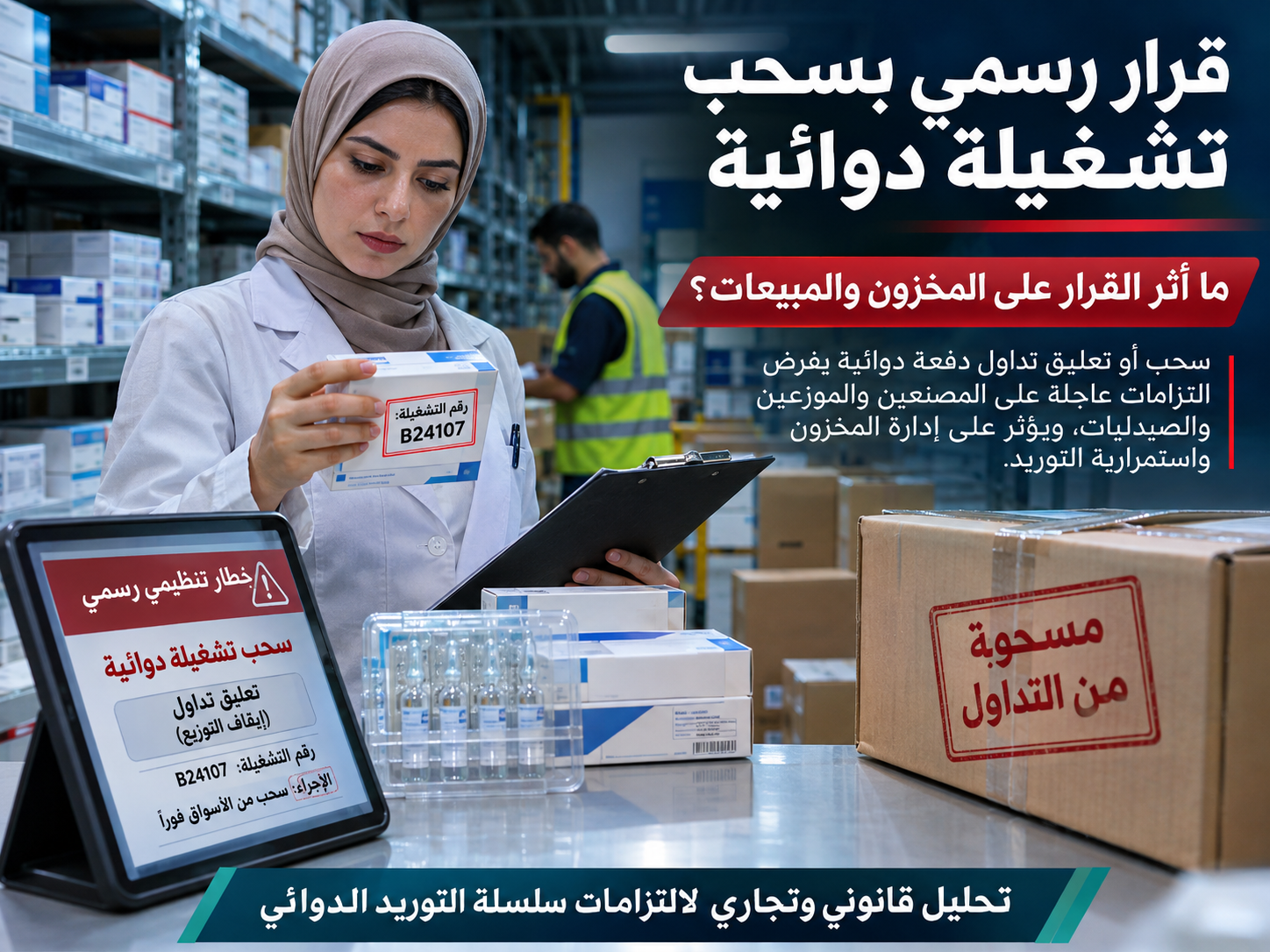
A Single Pharmaceutical Batch Recall Could Have Wider Commercial Consequences#
The withdrawal of a pharmaceutical batch may initially appear to be a limited regulatory measure affecting only a specific quantity of medication.
However, its commercial and legal consequences can extend far beyond removing products from pharmacy shelves.
Once an official recall notice is issued, pharmaceutical businesses must determine how to identify affected inventory, coordinate product withdrawals, comply with regulatory requirements, and manage any contractual or financial consequences.
Who is responsible for transportation and storage expenses? Can distributors recover the value of withdrawn products? Could pharmacies or healthcare providers pursue compensation for documented financial losses?
These questions have gained particular relevance following the Egyptian Drug Authority's November 2026 notice concerning Epikavit, illustrating the close relationship between pharmaceutical regulation, commercial contracts, and supply chain risk management.
What Did the Egyptian Drug Authority Announce?#
In November 2026, the Egyptian Drug Authority issued an official notice concerning the withdrawal of a specific batch of Epikavit 10 mg/ml ampoules, manufactured by EIPICO.
According to the official recall notice, the affected product details are:
Product Information | Details |
|---|---|
Pharmaceutical product | Epikavit 10 mg/ml ampoules |
Manufacturer | EIPICO |
Affected batch number | 2500865 |
Expiration date | January 31, 2028 |
Recall classification | Class II |
Reason for recall | Laboratory non-compliance finding |
Regulatory authority | Egyptian Drug Authority |
The Authority directed that the affected batch be withdrawn from circulation and subjected to the relevant seizure and securing procedures.
Importantly, the notice concerns the specifically identified batch rather than every batch of Epikavit available in the Egyptian market.
The publicly available notice does not provide detailed information about the specific laboratory test that produced the non-compliance finding. Therefore, it would be inappropriate to assume a particular product defect or confirmed patient harm without further evidence.
Official Source: Egyptian Drug Authority – Epikavit Recall Notice (PDF)
What Legal Obligations Arise from a Pharmaceutical Batch Recall?#
A pharmaceutical recall is not simply a logistical process. It may create regulatory, contractual, and operational obligations for multiple participants in the pharmaceutical supply chain.
The exact responsibilities depend on applicable legislation, regulatory instructions, contractual provisions, and the circumstances of the recall.
1. Pharmaceutical Manufacturers and Suppliers
Manufacturers and relevant suppliers must comply with the requirements imposed by the competent regulatory authority.
Depending on the applicable obligations, this may involve identifying affected products, coordinating recalls, reviewing quality-control records, and implementing corrective measures.
Proper documentation is particularly important when establishing the quantities distributed, the destinations of affected products, and the measures taken in response to the regulatory notice.
Manufacturers may also need to review their contractual arrangements with distributors to determine how product returns and associated expenses should be handled.
2. Pharmaceutical Distributors
Distribution companies play an important role in ensuring that affected pharmaceutical batches are identified and handled in accordance with regulatory instructions.
Their responsibilities may include reviewing warehouse inventory, identifying affected batch numbers, preventing further distribution, and coordinating with suppliers regarding product returns.
Distributors should also maintain accurate records of affected stock, product movements, communications, and associated expenses.
Such documentation becomes particularly important if disagreements arise over reimbursement, transportation charges, storage expenses, or compensation.
3. Pharmacies and Healthcare Facilities
Pharmacies, hospitals, and healthcare institutions should carefully examine their inventories to determine whether they hold products belonging to the affected batch.
Where identified, the products should be segregated from saleable or dispensable inventory and handled in accordance with the Authority's instructions.
The regulatory action should not automatically be interpreted as applying to other batches that are not identified in the notice, unless additional official instructions are issued.
Compliance requirements should be assessed with reference to the specific recall notice, Egyptian Drug Authority regulations, and applicable pharmaceutical legislation.
How Could the Recall Affect Pharmaceutical Inventory and Sales?#
From a financial perspective, a pharmaceutical recall can create costs that extend beyond the value of the recalled products.
The potential financial impact depends on several factors, including the quantity of affected inventory, its distribution across the market, replacement availability, and the contractual arrangements between participating businesses.
Inventory disruption and restricted working capital
Products subject to a recall may become unavailable for normal commercial activity. The value of affected inventory may remain tied up until the relevant procedures and financial arrangements are resolved.
For businesses managing substantial pharmaceutical inventories, this can place pressure on working capital.
Transportation and storage costs
Product withdrawal may involve additional transportation, handling, temporary storage, inspection, and administrative expenses.
These costs can increase when affected products have already reached multiple distributors, pharmacies, or healthcare facilities.
Sales interruption and replacement supply
The withdrawal of a particular batch may temporarily reduce the availability of that batch and require businesses to secure alternative supplies.
Depending on market demand and product availability, these adjustments may affect sales planning and delivery commitments.
Potential contractual disputes
Financial disagreements may arise where commercial partners have different interpretations of their obligations regarding returned goods, replacement products, and recall-related expenses.
However, these are potential consequences of pharmaceutical recalls generally. The official Epikavit notice does not establish that particular financial losses or contractual disputes have occurred in this case.
Who Is Responsible for Recall Costs and Compensation?#
One of the most important legal questions arising from pharmaceutical recalls concerns the allocation of financial responsibility.
A manufacturer, supplier, distributor, or healthcare provider may face expenses associated with withdrawing affected inventory.
Nevertheless, the issuance of a recall notice does not automatically establish that a single party must compensate all others for every resulting cost.
Determining responsibility generally requires consideration of several legal and commercial factors.
These include the terms of supply and distribution contracts, applicable regulatory obligations, the underlying reason for the product's non-compliance, and whether any party breached a contractual or legal duty.
When compensation is sought, the nature of the alleged damage and the causal connection between the breach and the financial loss may also require examination.
For example, a distribution agreement may contain specific provisions addressing defective products, product returns, transportation costs, and reimbursement procedures.
Such provisions must be interpreted alongside mandatory legal and regulatory requirements.
This is where specialized legal consultancy in healthcare and pharmaceutical regulation can play an important role, helping companies assess their contractual positions, identify potential liabilities, and evaluate available remedies.
What Should Pharmaceutical Businesses Do Following an Official Recall Notice?#
A coordinated response can help pharmaceutical companies and healthcare providers reduce operational disruption and manage their regulatory exposure.
The first priority is to verify the official notice and identify the exact product, batch number, and scope of the required action.
Businesses should then review inventory records, identify affected quantities, prevent further circulation where required, and follow the competent authority's instructions.
Manufacturers and distributors should also preserve relevant documentation, including purchase records, delivery receipts, inventory reports, and communications concerning the recall.
Where the withdrawal may have commercial consequences, reviewing contractual provisions governing defective products, returns, and financial liability becomes particularly important.
These measures help businesses establish a clear factual record, manage financial exposure, and respond appropriately if disputes arise.
Does the Decision Highlight the Growing Importance of Pharmaceutical Compliance in Egypt?#
The Epikavit recall demonstrates the importance of effective pharmaceutical quality management and product traceability.
For pharmaceutical businesses, regulatory compliance extends beyond obtaining the necessary licenses and approvals.
It also involves maintaining reliable distribution records, monitoring product quality, managing inventory, and establishing procedures for responding to regulatory notices.
Companies that can identify affected batches quickly and coordinate their response across the supply chain may be better positioned to limit disruption and protect commercial relationships.
The case also highlights the importance of integrating regulatory compliance with legal risk management and commercial planning.
Conclusion: A Pharmaceutical Recall May Be Only the Beginning of a Wider Commercial Challenge#
The Egyptian Drug Authority's decision concerning the identified Epikavit batch illustrates how pharmaceutical regulation can intersect with contractual obligations and financial risk.
While the immediate purpose of the recall is to address the affected batch, its implementation may require businesses to examine inventory records, distribution arrangements, contractual responsibilities, and potential financial exposure.
For manufacturers, distributors, pharmacies, and healthcare providers, an effective response requires both regulatory compliance and careful legal and commercial assessment.
Has your business been affected by a pharmaceutical recall or a regulatory decision suspending the circulation of a medicinal product?
Specialized legal consultancy can help assess the impact of the regulatory development on your operations, review supply and distribution agreements, clarify the responsibilities of the parties involved, and evaluate potential disputes or compensation claims.
A structured legal assessment can support informed commercial decisions while helping protect regulatory compliance and business continuity.


