
Faster Customs Clearance, but Are Delay Risks Really Eliminated?#
A shipment may arrive at an Egyptian port with its commercial documentation ready, while the importer continues waiting for a delivery order from the shipping agent.
In international trade, even a single missing document can delay cargo release and expose businesses to mounting storage, demurrage, and container detention charges.
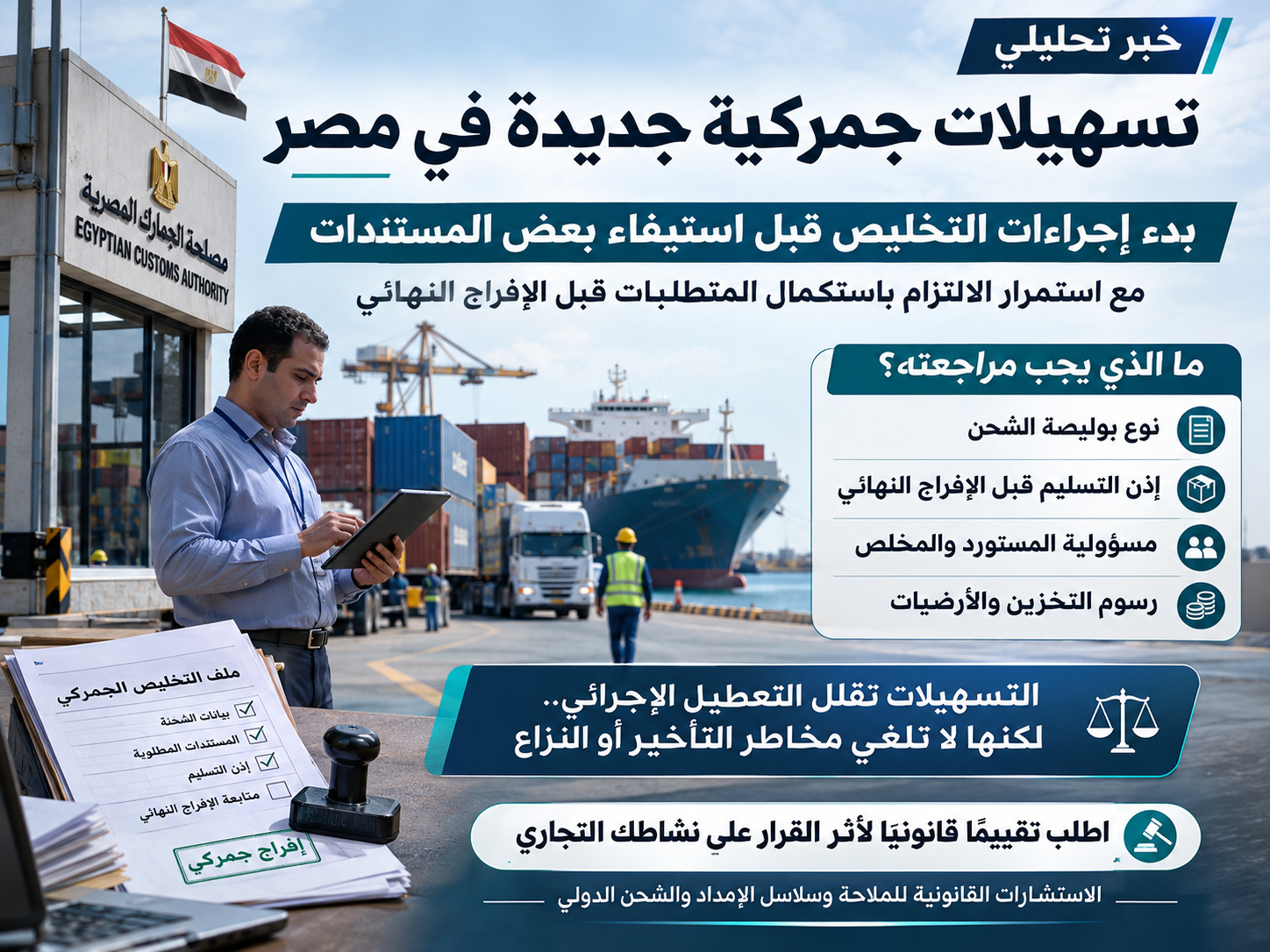
The customs facilitation measures announced by Egypt's Ministry of Finance aim to address part of this problem by allowing certain procedures to begin before the delivery order is submitted.
However, the amendment does not eliminate the requirement to provide the necessary documentation. Instead, it changes when particular documents must be submitted during the clearance process.
This distinction raises an important commercial question:
Will earlier initiation of customs procedures genuinely reduce financial losses, or could inadequate coordination between importers, customs brokers, and shipping agents continue to generate costly delays?
What Has Changed Under the New Customs Procedures?#
Ministerial Decree No. 262 of 2026 amended provisions of the executive regulations of Egypt's Customs Law, introducing adjustments intended to simplify documentation requirements and improve customs efficiency.
According to the Ministry of Finance's official announcement dated June 2, 2026, the measures allow customs procedures to begin upon the arrival of goods without necessarily requiring the delivery order at the initial declaration stage.
For eligible shipments, the bill of lading and the prescribed supporting documentation may enable the importer or customs broker to initiate the customs declaration process while the remaining requirements are completed.
Nevertheless, the regulatory treatment differs according to the type of bill of lading.
In particular, the amended provisions distinguish between bills of lading issued to order and named bills of lading, meaning the delivery-order requirements are not identical in every situation.
The measures therefore represent a targeted adjustment to documentation procedures rather than a general exemption from delivery-order requirements.
The Ministry of Finance indicated that these changes form part of broader efforts to reduce clearance times, improve logistical performance, and support trade and investment.
Why Does the Timing of Delivery-Order Submission Matter?#
The significance of the amendment lies in distinguishing between two separate stages of customs processing:
The initiation of customs formalities and submission of the customs declaration.
The completion of all necessary requirements before the goods are finally released.
Previously, delays in obtaining essential documentation could prevent certain customs procedures from progressing.
Under the amended framework, eligible shipments may proceed through preliminary formalities while the relevant parties complete the outstanding documentation.
This could allow customs brokers to coordinate inspections, verify shipment information, and complete other necessary procedures without waiting for every document to become available at the outset.
However, a shipment may still experience delays if a required delivery order or another essential document is not submitted before final release.
Consequently, the commercial benefit depends not simply on starting clearance earlier but on ensuring that all parties complete their remaining obligations within the required timeframe.
Could the Measures Reduce Storage and Demurrage Costs?#
From a financial perspective, reducing the time required to process customs documentation may help businesses limit expenses associated with cargo remaining at ports.
These expenses can include terminal storage charges, container demurrage, detention fees, additional handling costs, and logistical expenses arising from missed delivery schedules.
Nevertheless, the expected savings are not automatic.
The actual financial impact will depend on several factors, including the time required to obtain the delivery order, the completion of regulatory approvals, the speed of payment processing, shipping-line free-time arrangements, and container collection schedules.
For example, an importer may initiate customs clearance promptly but still incur substantial charges if the shipping agent issues the necessary delivery documentation after the agreed free period has expired.
Similarly, delays involving inspections or additional regulatory approvals may prevent final cargo release even when the initial customs declaration has been processed.
The new facilitation measures should therefore be viewed as an opportunity to reduce delays, not as a guarantee that storage and demurrage costs will disappear.
Who Is Legally Responsible When Cargo Release Is Delayed?#
The revised documentation procedures make the allocation of contractual responsibilities particularly important.
Importers
Importers should ensure that shipment information is accurate, required documents are provided when due, and the contractual obligations assigned to them are fulfilled.
They must also coordinate with customs brokers and shipping agents to avoid unnecessary delays in obtaining documents required for final release.
Customs Brokers
Customs brokers are generally responsible for performing the services established under their agreements and authorizations.
These responsibilities may include preparing declarations, reviewing the documentation received, communicating with customs authorities, and informing clients about missing documents or procedural obstacles.
However, a customs broker is not automatically liable for every delay affecting a shipment.
Liability depends on the relevant contractual obligations, the applicable legal rules, and the circumstances that caused the delay.
Shipping Agents
Shipping agents may have responsibilities relating to the issuance of delivery orders and other shipping documents.
Whether a delay gives rise to legal liability depends on the applicable contractual arrangements, shipping documentation, and relevant legal provisions.
Logistics Service Providers
Freight forwarders and logistics companies may be responsible for coordinating transportation, cargo handling, and delivery schedules, depending on the scope of their contractual commitments.
When a dispute arises, determining liability generally requires establishing a legally relevant breach or fault, actual damage, and the necessary causal connection between the breach and the loss, subject to the applicable law.
When Can Documentation Delays Become Commercial Disputes?#
A delay that initially appears to involve a routine shipping document may develop into a significant commercial dispute.
An importer may incur additional storage charges, experience disruption to production schedules, or fail to deliver goods to customers within the agreed timeframe.
The importer might then seek compensation from the customs broker, shipping agent, or logistics provider believed to be responsible.
However, the party facing the claim may argue that the delay resulted from missing documents, inaccurate information, regulatory requirements, or circumstances beyond its contractual responsibilities.
These disputes become more complicated when the parties have not maintained clear records of document requests, submission dates, notifications, and customs processing milestones.
For example, if an importer alleges that a customs broker delayed the release of goods, the broker may contend that essential documents were not supplied by the importer on time.
Resolving the dispute would require examining the underlying agreement, correspondence, customs records, and documented financial losses.
The amended customs procedures do not automatically establish additional liability for customs brokers or eliminate existing obligations imposed on importers.
Instead, they reinforce the practical importance of clearly defining responsibilities and maintaining accurate records throughout the shipment lifecycle.
What Should Importers and Customs Brokers Review Following the Amendment?#
Businesses involved in international trade should consider reviewing five important areas.
1. Customs Documentation Requirements
Review the documents required when submitting customs declarations and distinguish them from those that must be completed before final cargo release.
Particular attention should be paid to the type of bill of lading and any additional regulatory requirements applicable to the shipment.
2. Contracts and Authorizations
Examine customs brokerage agreements, shipping contracts, and service authorizations to determine which party is responsible for obtaining, submitting, and following up on each document.
3. Coordination With Shipping Agents
Establish clear procedures for requesting delivery orders and tracking their issuance to ensure that documentation delays do not prevent final release.
4. Storage, Demurrage, and Detention Exposure
Monitor applicable free-time periods and contractual charging arrangements.
Businesses should assess whether delays could generate additional port expenses or container-related charges.
5. Documentation and Evidence Management
Maintain records of correspondence, submission timestamps, customs notifications, payment confirmations, and document-delivery schedules.
These records can be essential when investigating the causes of delays or supporting potential compensation claims.
By adopting a structured approach, businesses may be better positioned to benefit from the amended procedures while managing contractual and financial exposure.
What Do the New Measures Mean for International Shipping and Supply Chains?#
The customs amendments reflect broader efforts to simplify administrative procedures and improve coordination among stakeholders involved in international trade.
According to the Ministry of Finance, the measures followed technical discussions involving customs authorities and other stakeholders in transportation, shipping, trade, and electronic customs processing.
Businesses with reliable document-management systems, clearly allocated responsibilities, and effective communication channels may be better positioned to benefit from the new arrangements.
For logistics providers, the amendments also highlight the growing importance of operational coordination and transparent contractual commitments.
From a legal perspective, simplified procedures do not eliminate the possibility of disputes concerning delayed shipments, additional charges, or alleged service failures.
Instead, effective contract drafting and documented compliance remain important safeguards against avoidable commercial losses.
Conclusion: Simplified Procedures Do Not Eliminate the Need for Risk Management#
Egypt's updated customs documentation requirements represent a regulatory development intended to facilitate trade and reduce administrative delays.
Allowing eligible customs procedures to begin before every document is available may help shorten processing times and improve cargo movement through Egyptian ports.
However, the economic benefits will depend on how effectively importers, customs brokers, shipping agents, and logistics providers coordinate their responsibilities.
The central challenge is therefore not merely initiating customs clearance earlier, but completing the entire process without unnecessary delays, additional expenses, or contractual disputes.
Specialized legal consultancy in maritime transport, supply chains, and international shipping can help businesses review customs brokerage agreements, clarify responsibilities, assess documentation requirements, and evaluate potential claims arising from cargo delays.
Could the new customs procedures affect your company's shipments or contractual obligations?
Request a legal assessment of the regulatory changes and their potential impact on your business, including customs documentation, shipping agreements, liability exposure, and possible financial losses resulting from delayed cargo release.


