1. When a Supplier Fails to Meet Specifications: A Business Decision That May Cost More Than the Shipment Itself#
A company may enter into a supply agreement for raw materials or finished products in specified quantities and according to agreed technical standards, only to discover upon delivery that part of the shipment is defective, quantities are missing, or the products do not meet the required specifications.
In such circumstances, the problem goes beyond the difference between what was ordered and what was received. It may develop into a broader business challenge affecting customer commitments, production schedules, and cash flow.
Management typically faces three possible options:
Continue working with the existing supplier, subject to correcting the defects or replacing missing quantities.
Negotiate a price reduction or compensation for the resulting losses.
Terminate the relationship and move to an alternative supplier to secure the required quantities.
However, choosing any of these options without a proper financial assessment may result in additional losses, even when the apparently cheapest option seems attractive at first.
The key question should therefore be: What is the total economic cost of each option, rather than simply the purchase price?
2. What Is the Actual Cost of Defective or Incomplete Goods?#
One common mistake is limiting the company's losses to the value of defective products, while overlooking other expenses that may exceed the value of the goods themselves.
The financial impact can be divided into several categories.
First: Direct Losses
These include the value of damaged or unusable products, the cost of missing quantities, additional inspection and sorting expenses, and any costs associated with repairs or repackaging.
Second: Delay-Related Costs
A supplier's failure to replace defective products or complete missing quantities on time may interrupt production or delay customer deliveries.
Potential consequences include:
Reduced production during the interruption period.
Additional operating expenses.
Unexpected storage and handling costs.
Contractual delay penalties, where applicable under the agreement.
Third: Commercial Losses
Unreliable supply may result in lost customers, reduced customer confidence, or the need to purchase alternative products at higher prices to avoid business disruption.
Fourth: Cash Flow Impact
When a company pays for a shipment and subsequently incurs additional expenses to resolve quality issues or replace products, its available liquidity may be affected.
Supplier evaluation should therefore extend beyond the purchase price to include the total cost of obtaining compliant products within the required delivery schedule.
3. Option One: Continuing with the Existing Supplier After Correcting the Problem#
Continuing with the existing supplier may be appropriate when the issue is limited, the supplier can resolve it within an acceptable timeframe, and practical safeguards are available to prevent recurrence.
However, this decision should not be based solely on the fact that the company has an established commercial relationship with the supplier.
What Costs Should Be Considered?
The cost of replacing defective products or supplying missing quantities.
Additional inspection and quality verification expenses.
Additional shipping costs, where applicable.
Potential delivery delays.
Additional supplier monitoring and quality control expenses.
Potential losses if the same problem occurs again.
Potential Economic Benefits
Continuing the relationship may generate meaningful savings, particularly when the existing supplier offers competitive prices, has the capacity to meet large orders, and understands the company's technical and operational requirements.
It may also eliminate the time and expenses associated with identifying, evaluating, and approving a new supplier.
When Does Continuing Become Expensive?
If defects recur, corrective actions are delayed, or the company must conduct intensive inspections on every shipment, the apparent savings may turn into ongoing operating costs.
A supplier's promise to resolve the issue is therefore insufficient without assessing its actual ability to do so.
4. Option Two: Switching to an Alternative Supplier#
Changing suppliers may initially appear expensive, particularly when the alternative supplier charges higher prices or requires additional qualification and testing procedures before supplying the required products.
Nevertheless, this option may become economically preferable when the cost of continuing with the existing supplier increases over time.
What Costs Are Associated with Changing Suppliers?
Identifying and evaluating a new supplier.
Testing samples and verifying technical specifications.
Contract negotiation and supplier approval procedures.
The price difference between the new and existing suppliers.
Transportation, shipping, and insurance expenses, depending on the supply terms.
Transition costs and inventory management during the changeover.
Potential supply delays during the transition period.
Potential Economic Benefits
Reducing the likelihood of recurring quality problems.
Improving supply reliability.
Lowering inspection and repair expenses.
Reducing the risk of production interruptions.
Improving the company's ability to meet customer delivery commitments.
However, an alternative supplier should not automatically be considered better simply because it offers different specifications or promises faster delivery. It should undergo the same financial and technical evaluation criteria.
5. How to Compare the Economic Cost of the Existing Supplier and the Alternative#
The most effective approach is to prepare a financial analysis comparing the total cost of each option over the same period, rather than comparing unit purchase prices alone.
The following formulas can be used:
Economic Cost of Continuing with the Existing Supplier:
Supply cost + defect correction costs + missing quantity replacement costs + delay-related expenses + additional quality control costs + estimated losses from recurring problems.
Economic Cost of Switching to an Alternative Supplier:
New supply cost + transition and qualification costs + price difference + shipping and inspection expenses + potential losses during the transition period.
The assessment should reflect the relevant evaluation period, order volumes, and estimated risks. The same loss should not be counted more than once.
Practical Financial Comparison Example
Assume that a manufacturing company purchases raw materials from an existing supplier and discovers defects in part of the shipment. Management must evaluate two alternatives.
The following figures are hypothetical and are provided solely to illustrate the analysis method. They do not represent actual market prices or real transaction data.
Cost Element | Existing Supplier | Alternative Supplier |
|---|---|---|
Supply cost | 500,000 | 525,000 |
Defect correction / qualification | 20,000 | 10,000 |
Delay and transition costs | 25,000 | 15,000 |
Additional inspection costs | 10,000 | 5,000 |
Total Cost | 555,000 | 555,000 |
In this example, the estimated total cost of both options is equal, despite the difference in their purchase prices.
This demonstrates that a supplier offering a lower price is not necessarily the lowest-cost option from an economic perspective. Similarly, a higher-priced alternative may not create an additional financial burden if its quality-related and operational costs are lower.
The final decision should also consider the likelihood of recurring defects, quality consistency, and the supplier's ability to meet future delivery requirements.
6. Which Indicators Help Management Make the Right Decision?#
For a more accurate comparison, management should consider more than total cost alone. A range of financial and operational indicators should be evaluated.
Evaluation Indicator | What It Measures |
|---|---|
Defective product rate | Supply quality level |
On-time delivery rate | Supplier reliability |
Cost of defects | Financial impact of quality problems |
Delay-related costs | Impact of delivery failures |
Total supply cost | Actual procurement cost |
Problem recurrence rate | Likelihood of continued losses |
Alternative supplier qualification period | Time required to complete the transition |
These indicators can support a structured supplier performance evaluation process rather than relying solely on personal impressions or existing commercial relationships.
7. When Should a Company Continue Supply, and When Should It Consider Changing Suppliers?#
There is no single rule that applies to every business. However, the following criteria can help guide the assessment.
Continuing with the Existing Supplier May Be Worth Considering When:
The problem is limited and has not occurred repeatedly.
The supplier demonstrates a genuine ability to correct the issue.
Correction costs are lower than the costs of switching suppliers.
Corrective measures do not affect the company's customer commitments.
Effective quality control procedures can ensure that future shipments comply with specifications.
Switching to an Alternative Supplier May Be Worth Considering When:
Non-compliance occurs repeatedly.
The supplier fails to meet replacement or completion deadlines.
Repair and additional inspection costs continue to increase.
The company experiences recurring operational or commercial losses.
An alternative supplier can meet the required quality and delivery standards at an economically reasonable cost.
In some cases, the most appropriate solution may be to diversify supply rather than rely on a single supplier. Allocating orders between multiple suppliers can reduce the risk of supply interruptions when one supplier experiences difficulties.
8. Do Not Change Suppliers Before Reviewing Your Contractual Obligations#
In addition to the financial comparison, the company should review the agreement governing its relationship with the existing supplier, particularly when goods are defective or delivered in incomplete quantities.
Important contractual provisions include:
Agreed technical specifications and quantities.
Inspection, acceptance, and defect notification procedures.
Supplier obligations regarding replacement or completion of missing quantities.
Warranty provisions and compensation for losses.
Delivery deadlines and contractual penalties.
Contract termination or suspension provisions.
Dispute resolution mechanisms and applicable law.
Terminating a supply agreement without reviewing its terms may create additional disputes or affect rights that the company could otherwise have pursued.
The company should also preserve all documents proving the condition of the shipment, including inspection reports, delivery and acceptance records, invoices, correspondence, photographs, and formal notices sent to the supplier.
It is important to document defects and shortages and notify the supplier in accordance with the procedures and deadlines established in the agreement. Delays in documenting or reporting non-compliance may affect the company's legal position, depending on the contract and applicable law.
9. How Can Financial Analysis Help Reduce Supply-Related Losses?#
Financial analysis is not limited to comparing the existing supplier with an alternative. It also helps identify the sources of losses resulting from poor supplier performance.
A specialized financial report can help management:
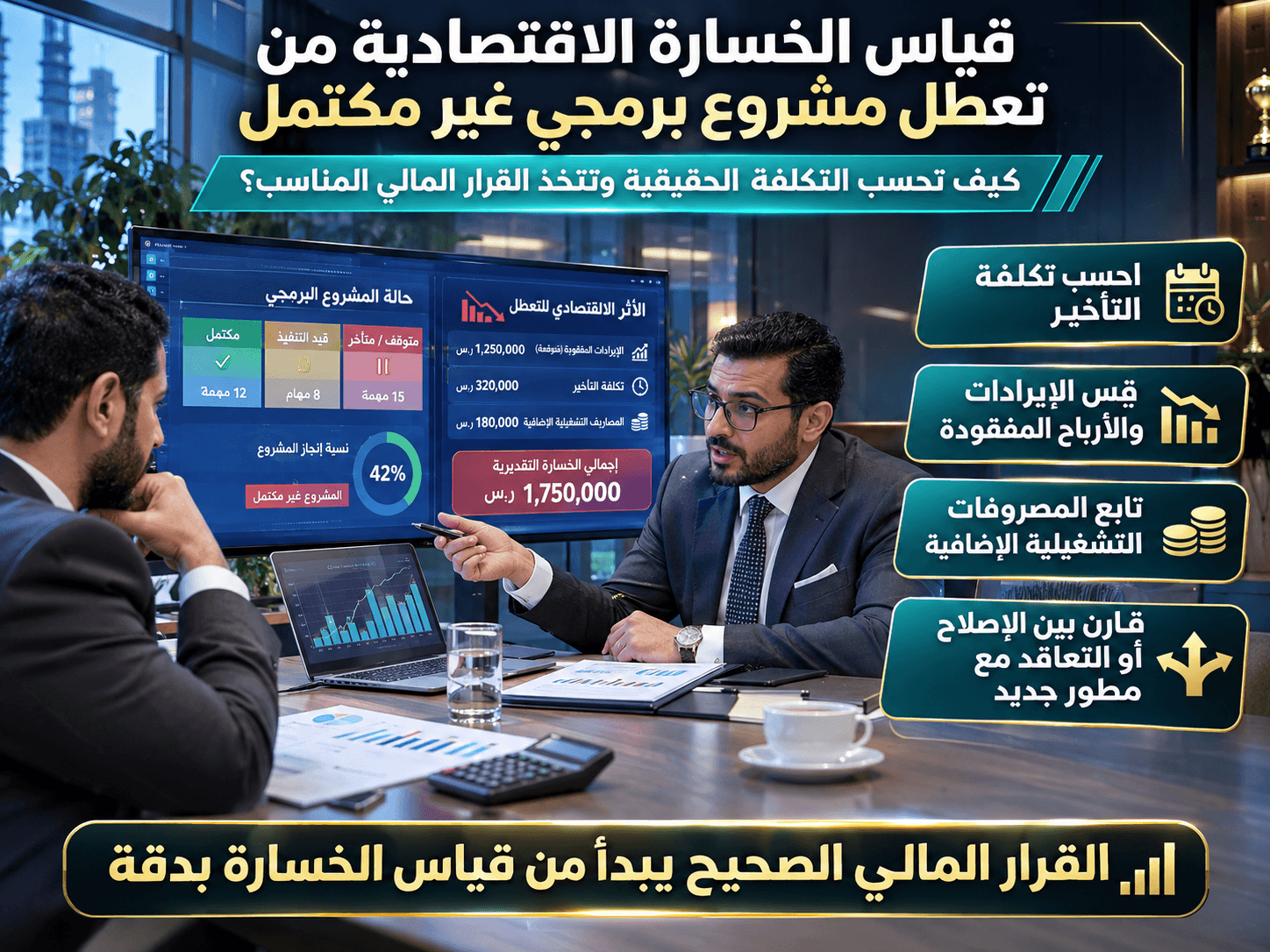
Determine the total direct and indirect losses resulting from defective or incomplete products.
Measure delay-related costs and their impact on production and sales.
Compare the actual costs of different suppliers.
Estimate the financial impact of continuing the existing relationship or switching suppliers.
Assess financial risks associated with recurring non-compliance.
Identify alternatives that balance cost, quality, and supply continuity.
The report may also include several financial scenarios, such as continuing with the existing supplier after quality improvements, maintaining the current level of supply problems, or gradually transitioning to an alternative supplier.
These scenarios help management understand the potential financial consequences of each decision before committing to additional expenses.
10. The Role of Financial Reporting and Performance Analysis in Decision-Making#
When a company experiences supply-related problems, making the right decision requires reliable financial and operational information rather than a simple comparison of supplier quotations.
Financial reporting and performance analysis help transform procurement data, invoices, inspection reports, and delivery records into measurable indicators that management can evaluate and compare.
A comprehensive assessment may include:
Identifying direct and indirect financial losses.
Calculating the total cost of continuing with the existing supplier.
Estimating the cost of switching to an alternative supplier.
Assessing the impact of each option on cash flow and profitability.
Identifying financial risks associated with continued supply.
Developing alternative scenarios and data-driven recommendations.
The assessment may involve reviewing invoices, procurement records, and supply data, evaluating supplier performance, and preparing a financial report that helps management understand the available options and make a more informed business decision.
Conclusion: The Right Decision Starts with Calculating the True Cost#
Choosing between an existing supplier and an alternative should not depend solely on the purchase price. It should be based on the total economic cost of each option and its impact on product quality, operational continuity, and customer commitments.
Continuing with the existing supplier may be less expensive when the problem can be effectively resolved. However, changing suppliers may become more appropriate when recurring losses exceed the savings achieved through lower purchase prices.
Preparing a comprehensive financial assessment and comparing different scenarios are therefore important steps before making a decision, particularly when supply volumes are substantial or when supply performance directly affects production and distribution.
If your company is experiencing recurring supply problems, requesting a financial assessment of the impact, losses, and available options can help you understand the true cost of the problem and make decisions based on clear data and professional analysis.