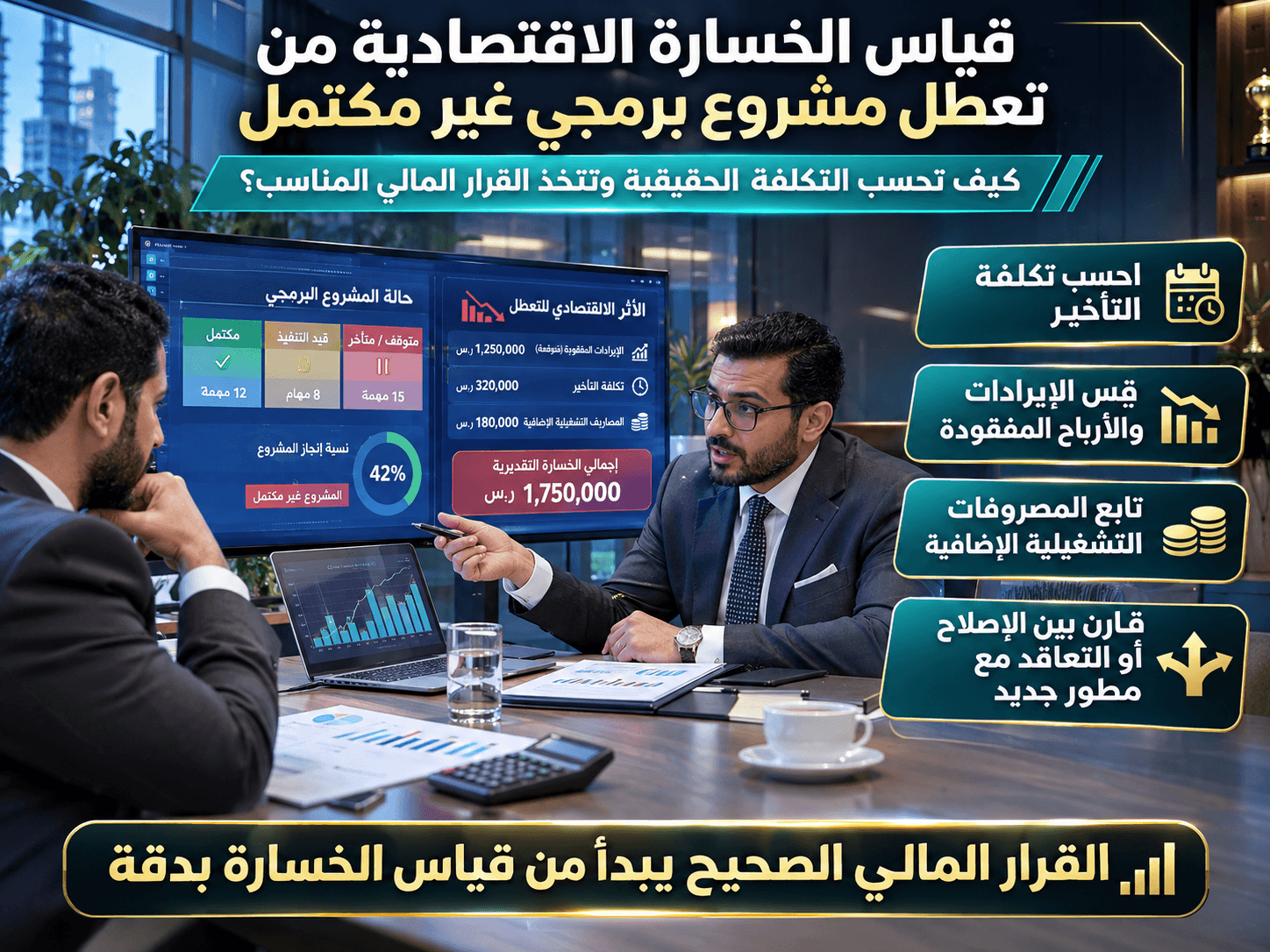
When a Manager Enters Into an Unauthorized Contract: Where Do the Financial Losses Begin?#
A company may discover that one of its managers has entered into a supply agreement, purchased assets, approved services, or granted external parties certain rights without completing the required internal approval procedures or obtaining authorization from the appropriate decision-makers.
In such situations, the issue extends beyond whether the manager had the authority to sign the agreement. A more important economic question arises: What financial commitments has the company become exposed to, and what would it cost to continue, modify, or terminate the contract?
Although the contract value may be clearly stated, the actual financial impact may include additional expenses, penalties, operational disruption, frozen resources, and lost business opportunities.
For this reason, companies need a structured financial assessment to identify their total exposure, distinguish existing commitments from realized losses and potential costs, and evaluate the available options before making a decision.
First: What Does the Cost of Unauthorized Contracts Mean?#
The cost of unauthorized contracts refers to the direct and indirect financial burdens that a company may incur when a contract or financial commitment is created without completing the applicable internal approval and authorization procedures.
However, the absence of internal approval does not automatically mean that a contract is legally invalid or that the company can simply withdraw from it. Its legal effect depends on the company's legal structure, the signatory's position and authority, and the relevant contractual documents and circumstances.
From an economic perspective, such contracts should be treated as potential sources of financial and operational risk until their legal and accounting implications have been properly assessed.
Second: What Types of Costs Should Companies Measure?#
To avoid underestimating potential losses, companies should divide the financial impact into several categories.
1. Direct Contractual Commitments
These include amounts the company may be required to pay for goods, services, or completed work, such as advance payments, outstanding invoices, and purchases that have already been approved or fulfilled.
Companies should distinguish between the total contract value, amounts that have become payable, and future payments that remain subject to specific contractual conditions or implementation milestones.
2. Contract Termination and Modification Costs
Discovering an unauthorized contract may lead the company to consider terminating it or renegotiating its terms. This may result in:
Contract termination fees or penalties.
Potential contractual compensation.
Loss of part or all of advance payments.
Negotiation and contract amendment expenses.
Costs associated with transferring the arrangement to another supplier or service provider.
3. Asset and Resource-Related Costs
If the unauthorized transaction involves purchasing unnecessary equipment, materials, or other assets, the company may incur storage, maintenance, insurance, and transportation expenses, as well as potential losses when reselling those assets.
The company should also assess the cost of capital tied up in these assets and whether they can be utilized in other business activities.
4. Operational Disruption Costs
An unsuitable contract may delay a project, interrupt production, or disrupt the supply chain. This can lead to:
Increased operating expenses.
Delayed product deliveries.
Lost commercial opportunities.
Emergency procurement from alternative suppliers.
Reduced efficiency in the use of available resources.
5. Financial Risks and Potential Liabilities
The company may face claims or disputes arising from the contract, as well as financial obligations that depend on the outcome of negotiations or legal proceedings.
These risks should be assessed separately. Potential amounts should not automatically be treated as confirmed losses without verifying the applicable accounting recognition requirements.
Third: How Can a Company Measure the Actual Cost of Unauthorized Commitments?#
The first step is to identify all contracts that have not completed the required approval procedures and analyze each one separately.
This assessment can be conducted through the following stages:
Stage 1: Identify Existing Financial Commitments
The finance department should collect contracts, purchase orders, correspondence, invoices, delivery records, and any other documents demonstrating financial commitments or transactions associated with the relevant decision.
The company should identify:
The total value of each contract.
Amounts already paid.
Outstanding amounts due.
The value of goods or services already received.
Future commitments related to contract performance.
Contract termination and modification provisions.
Stage 2: Identify Direct and Indirect Costs
After identifying the commitments, the company should separate costs that can be directly measured from indirect costs that require further analysis and estimation.
It is important to avoid double counting. For example, an advance payment should not be included within the total contract value and then added again as a separate loss.
Stage 3: Evaluate Available Financial Scenarios
The assessment should not be limited to calculating the current contract cost. Instead, the company should compare the available alternatives:
Continuing with the contract if it provides sufficient economic value.
Renegotiating prices, deadlines, or the scope of work.
Replacing the supplier or service provider.
Terminating the contract if the cost of continuing exceeds the cost of exit, subject to the applicable legal implications.
Stage 4: Prepare a Financial Exposure Report
The final assessment should include total commitments, realized costs, expected expenses, potential risks, and a comparison of the available scenarios.
The report should also explain the assumptions used, the reliability of the underlying data, and any matters requiring additional legal or accounting review.
Fourth: A Practical Example of Measuring the Cost of an Unauthorized Contract#
Assume that a company manager enters into a supply contract worth EGP 1,000,000 without completing the required internal approval procedures.
A subsequent review identifies the following:
Assessment Item | Amount |
|---|---|
Total contract value | EGP 1,000,000 |
Advance payment made | EGP 200,000 |
Value of supplies received | EGP 300,000 |
Additional contract-related expenses | EGP 40,000 |
Estimated contract termination cost | EGP 80,000 |
Assuming the received supplies provide economic benefits to the company and the EGP 80,000 termination cost is confirmed under the contractual terms, the total cash flow associated with the contract does not necessarily represent the company's total loss.
An advance payment is not automatically a loss, and the value of received supplies may correspond to inventory, assets, or operational benefits.
The company should therefore prepare a separate analysis identifying:
Remaining contractual commitments.
The value of benefits already received.
Recoverable amounts.
The cost of continuing with the contract.
The cost of terminating or modifying it.
The expected net financial impact of each alternative.
This example is illustrative only and does not constitute a final accounting treatment or a legal determination regarding the validity of the contract.
Fifth: How Should Companies Choose Between Continuing and Terminating a Contract?#
Once the financial exposure has been identified, management needs to compare the available alternatives based on their impact on liquidity, profitability, and operational capacity.
Continuing With the Contract
This may be appropriate when the remaining work provides economic value, and the cost of continuing is lower than the cost of termination and replacement, provided the legal and administrative position can be properly addressed.
Renegotiating the Contract
Renegotiation may be an economically suitable option if the company can reduce prices, modify the scope of work, restructure payment schedules, or extend deadlines to reduce pressure on cash flow.
Terminating the Contract
Termination may be more appropriate when the cost of continuing is excessive or the contract no longer serves the company's business needs. However, the company must first assess termination provisions, potential claims, and the cost of transitioning to an alternative supplier or arrangement.
The decision should not be based solely on the total contract value. Instead, it should compare the future costs of each alternative while considering the relevant legal and operational risks.
Sixth: What Documents and Financial Data Are Needed for an Accurate Assessment?#
The accuracy of the financial assessment depends on the completeness of the information collected from the company's different departments.
The most important documents include:
Copies of contracts, agreements, and purchase orders.
Authorization documents and management delegation records.
Board meeting minutes and relevant approval resolutions.
Invoices, payment receipts, and bank transfer records.
Delivery records and inspection reports.
Correspondence exchanged with contractual counterparties.
Statements of financial commitments and related expenses.
Documents relating to termination, amendments, or financial claims.
Collecting these documents helps connect each financial commitment to the transaction that created it and determine whether the relevant records are complete and properly supported.
Seventh: How Can Companies Prevent Unauthorized Financial Commitments From Happening Again?#
Addressing each unauthorized contract as an isolated incident is not enough. Companies should identify the internal administrative and accounting weaknesses that allowed the situation to occur.
An effective internal control system should ensure that financial commitments are not created without appropriate review and approval under clearly defined authority limits.
Key preventive measures include:
1. Establishing a Clear Delegation of Authority Matrix
Companies should identify who is authorized to negotiate, sign, purchase, and approve transactions, while defining financial limits for each management level.
2. Linking Contracts to Documented Approvals
Purchase orders and new financial commitments should be supported by clear approval documents that can be retrieved and reviewed.
3. Separating Administrative and Financial Responsibilities
The request, approval, execution, and review of a transaction should not be concentrated in the hands of a single individual. This reduces the risk of errors and unauthorized decisions.
4. Creating a Centralized Register of Financial Commitments
All contracts, purchase orders, payments, and future obligations should be recorded in a unified register that enables the finance department to monitor the company's financial exposure continuously.
5. Conducting Periodic Contract Reviews
Existing contracts should be compared against approved authorizations, with particular attention to commitments that exceed delegated authority limits or fail to comply with internal procedures.
6. Developing Document Control and Cost Accounting Systems
Every contract should be linked to a specific cost center, financial category, and responsible approver. This allows the company to identify actual costs and monitor deviations between approved commitments and actual expenses.
Eighth: How Do Cost Accounting Systems Help Detect Problems Before They Become Financial Losses?#
Cost accounting systems play an important role in identifying the financial impact of contractual commitments, particularly in companies managing multiple projects or departments dealing with different suppliers and service providers.
When each contract is linked to a specific cost center, management can identify the financial commitments associated with it, compare them against the approved budget, and detect deviations at an early stage.
Integrating document control procedures with cost accounting systems also helps track each transaction from the initial purchase request through final payment, identify the person responsible at every stage, and detect commitments made without the required approvals.
As a result, the accounting system does not merely record expenses after they occur. It also provides management with the information needed to make more accurate financial decisions and reduce future risks.
Ninth: When Does a Company Need a Specialized Financial Assessment?#
A company should consider a specialized financial assessment when it discovers multiple unauthorized contracts, unclear financial commitments, or discrepancies between recorded agreements and issued approvals.
The need becomes more significant in situations involving:
Large financial commitments made without clear authorization.
Repeated violations of management authority limits.
Contracts with unclear future financial costs.
Expenses or payments unsupported by complete documentation.
Disputes concerning contractual liabilities or termination costs.
Pressure on liquidity or operating budgets caused by unplanned commitments.
In these circumstances, a specialized financial review can help determine the company's financial exposure, evaluate available alternatives, and develop a practical approach to addressing internal control weaknesses.
How Can Professional Services Help Assess Financial Commitments and Improve Internal Controls?#
Managing unauthorized contracts requires a combination of contractual document review, financial data analysis, and an understanding of weaknesses in internal procedures.
Through document control system design and cost accounting system development, companies can receive support in:
Reviewing documentation workflows related to contracts and financial commitments.
Analyzing direct and indirect costs resulting from contractual arrangements.
Identifying deviations between actual expenses and approved budgets.
Developing approval and authorization documentation procedures.
Linking contracts, cost centers, and responsible departments.
Preparing reports that help management assess risks and make informed decisions.
Coordination with legal specialists can also help assess the legal position of the relevant contracts and identify available options, ensuring that financial decisions are not made without considering the company's legal obligations.