
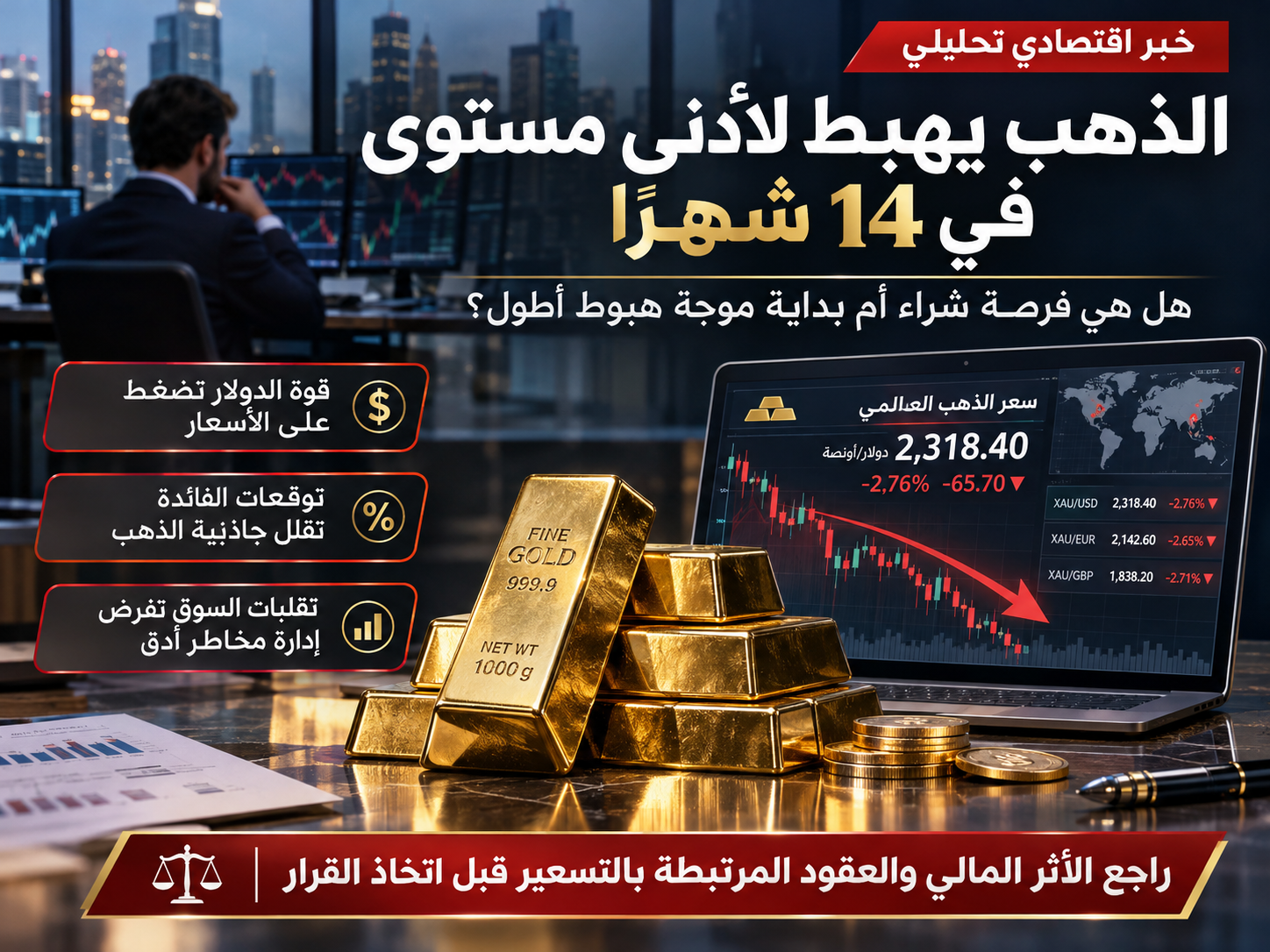
Why Is Gold Losing Value Despite Global Economic Uncertainty?#
Gold has traditionally been considered one of the most reliable safe-haven assets during periods of economic instability.
However, recent developments in global financial markets have presented a different picture.
Despite continuing concerns about inflation, monetary policy, and economic uncertainty, gold experienced significant selling pressure, pushing prices to their lowest levels in more than a year.
The decline highlights an important question for investors:
Does the recent fall represent a temporary market correction, or could it signal a broader change in gold investment conditions?
What Happened in Global Gold Markets?#
On November 18, 2026, spot gold prices declined by approximately 3.2%, according to Reuters, as the US dollar strengthened and Treasury yields increased.
Selling pressure continued into November 19, when gold reached $3,693.13 per ounce before recovering some of its losses.
The decline coincided with growing market expectations that the Federal Reserve could increase interest rates during its December 2026 meeting.
These developments demonstrate the sensitivity of gold prices to changes in monetary policy expectations and global financial conditions.
What Are the Main Reasons Behind the Gold Price Decline?#
Several economic factors contributed to the recent downward movement.
1. Strengthening of the US Dollar
Gold is internationally priced in US dollars.
When the dollar strengthens, purchasing gold becomes more expensive for investors holding other currencies, potentially reducing global demand.
According to Reuters, the US Dollar Index reached its highest level since April 2025 during the week.
A stronger dollar can therefore create additional downward pressure on gold prices.
2. Expectations of Higher Interest Rates
Gold does not generate regular income through interest payments or dividends.
Consequently, when interest rates rise, interest-bearing financial assets such as government bonds may become more attractive.
Higher expected returns on alternative investments increase the opportunity cost of holding gold, potentially encouraging investors to reduce their exposure.
3. Changes in Investor Expectations
Federal Reserve meeting minutes indicated persistent concerns about inflation, strengthening expectations of tighter monetary policy.
On November 19, market pricing suggested an approximately 91% probability of a quarter-percentage-point interest rate increase in December.
However, these figures represented market expectations rather than an official Federal Reserve decision.
Does Falling Gold Mean It Is No Longer a Safe-Haven Asset?#
Not necessarily.
Gold may continue to serve as a long-term hedge against financial uncertainty while experiencing short-term declines caused by currency movements, interest rates, and investor liquidity requirements.
Different investors also hold gold for different purposes.
Some purchase it to preserve wealth or diversify their portfolios, while others trade it to profit from short-term price fluctuations.
Therefore, a sharp decline over several trading sessions does not necessarily eliminate gold's long-term investment role.
Instead, it highlights the importance of understanding the economic conditions that influence its price.
Who Benefits and Who Loses When Gold Prices Fall?#
The financial consequences of declining gold prices vary across market participants.
Market Participant | Potential Financial Impact |
|---|---|
Existing gold investors | Reduced market value of holdings and potential realized losses if sold |
New investors | Potential opportunities to purchase gold at lower prices, subject to further downside risks |
Jewelry manufacturers | Lower raw material costs, but possible losses on previously purchased inventory |
Gold importers | Potentially lower purchasing costs, depending on exchange rates and contract terms |
Gold traders | Changes in inventory valuation, trading margins, and exposure to price volatility |
The actual impact depends on each business's pricing strategy, inventory management, hedging arrangements, and exposure to foreign exchange fluctuations.
How Could the Global Decline Affect Gold Prices in Egypt?#
Gold prices in Egypt are influenced by more than international market prices.
Domestic pricing also depends on the exchange rate between the Egyptian pound and the US dollar, local supply and demand, trading costs, and market conditions.
For example, even if international gold prices decline, local prices may not fall by the same percentage if the Egyptian pound weakens against the dollar.
Similarly, stronger local demand or market supply constraints may influence domestic prices independently of global movements.
Therefore, investors in Egypt should consider both international gold prices and domestic market factors before making purchasing or selling decisions.
Is Now the Right Time to Buy Gold?#
A significant decline does not necessarily indicate that gold has reached its lowest possible price.
Likewise, recent selling pressure does not guarantee that the downward trend will continue.
Three potential market scenarios deserve consideration.
Scenario One: Continued Price Declines
If the US dollar continues strengthening and expectations of higher interest rates intensify, gold could face further selling pressure.
Under these conditions, prices may remain vulnerable to additional declines.
Scenario Two: Market Stabilization
If interest rate expectations become more stable and the dollar stops appreciating, gold could enter a period of sideways trading.
Investors may then focus on upcoming inflation reports, employment figures, and Federal Reserve announcements.
Scenario Three: A Potential Recovery
If Treasury yields decline, the US dollar weakens, or investment demand strengthens, gold could recover part of its recent losses.
However, these scenarios are analytical possibilities rather than confirmed forecasts.
What Are the Legal and Commercial Implications of Falling Gold Prices?#
For businesses operating in gold trading, manufacturing, importing, or distribution, price fluctuations can create legal and financial challenges that extend beyond changes in commodity values.
Companies may encounter disputes concerning contractual pricing, delivery deadlines, payment obligations, and responsibility for unexpected market movements.
For example, a business that enters into a long-term gold supply agreement at a fixed price may face financial pressure if market prices change significantly before delivery.
Similarly, disagreements may arise when contracts do not clearly specify the pricing date, currency conversion mechanism, or procedures for adjusting prices.
These risks highlight the importance of properly drafted commercial agreements.
Contracts should clearly address:
Pricing and price-adjustment mechanisms.
Delivery schedules and payment obligations.
Currency exchange risks.
Responsibilities arising from market fluctuations.
Dispute resolution procedures.
A decline in gold prices does not automatically entitle a contracting party to amend or terminate an agreement.
Such rights depend on the applicable law, contractual provisions, and circumstances of the individual case.
How Should Businesses and Investors Respond to Gold Market Volatility?#
Effective financial management requires more than attempting to predict the next price movement.
Companies exposed to gold prices should assess how fluctuations could affect inventory valuation, operating margins, cash flow, and future contractual obligations.
Financial sensitivity analysis can help businesses understand the potential consequences of different price scenarios.
For companies engaged in long-term supply agreements, reviewing contractual pricing provisions and appropriate risk management strategies may help reduce financial uncertainty.
Investors should also evaluate their investment objectives, liquidity requirements, risk tolerance, and portfolio diversification before making significant decisions.
Conclusion: Are the Rules of Gold Investment Changing?#
Gold's decline to its lowest level in approximately 14 months demonstrates how strongly precious metal prices can respond to interest rate expectations, currency movements, and changing financial market conditions.
Although gold continues to play an important role in many investment strategies, recent developments show that it is not immune to substantial short-term volatility.
The current decline should therefore not be interpreted automatically as either a guaranteed buying opportunity or confirmation of a prolonged market downturn.
Sound financial decisions require a comprehensive assessment of market conditions, investment objectives, and potential risks.
For businesses exposed to gold prices or other commodity fluctuations, professional financial analysis, commercial contract review, and risk assessment can help protect business interests and support informed investment and operational decisions.


