1. Why Do Unpaid Invoices Become a Legal Problem?#
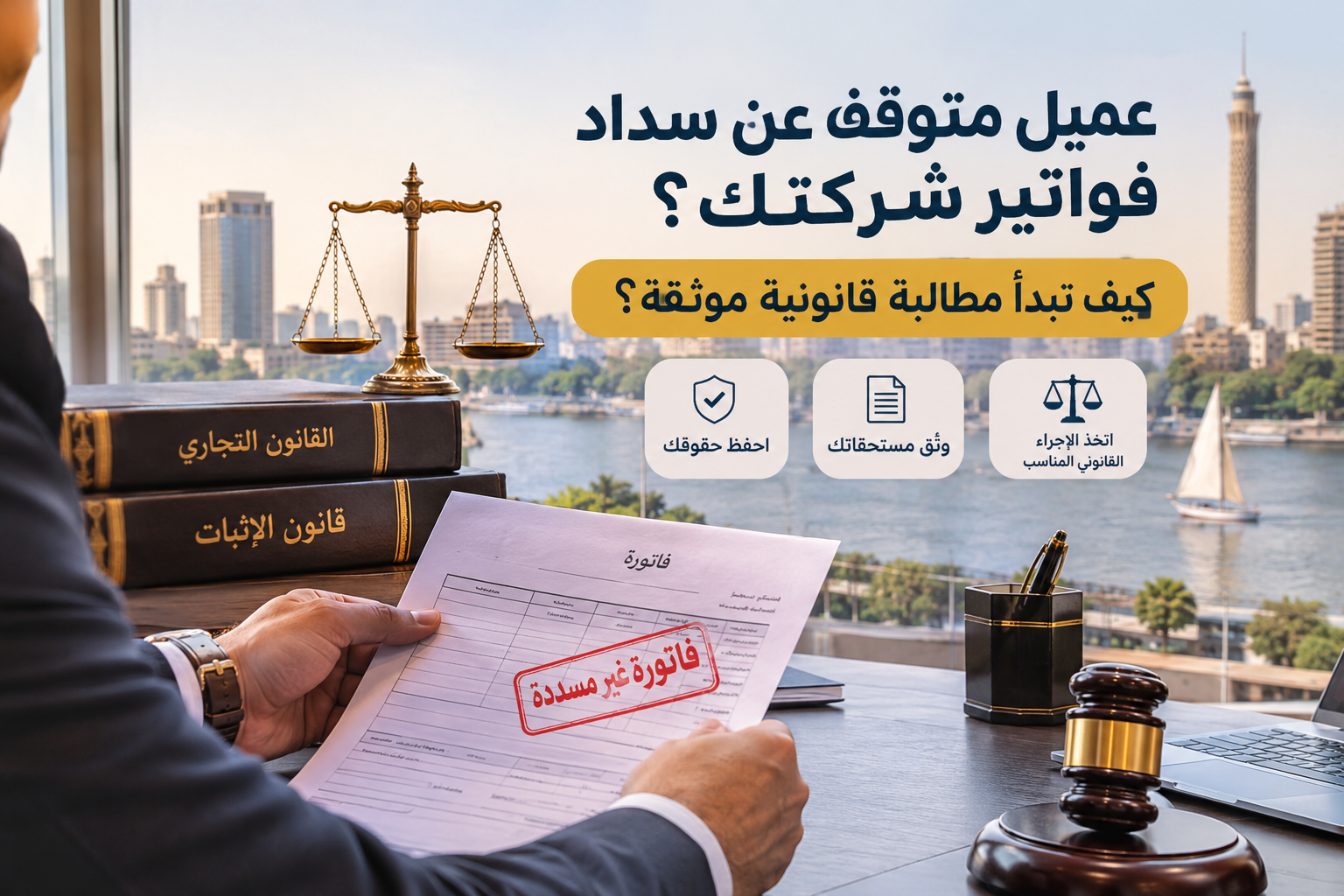
A business relationship may end after a company has supplied goods or provided services, while the customer fails to settle the outstanding invoices. Initially, the company may rely on friendly reminders and repeated payment requests. However, the situation becomes more complicated when the customer continues delaying payment or begins disputing the debt.
Common situations include:
The customer denies receiving the goods or services.
The customer disputes the invoice amounts despite their issuance.
The customer alleges defects in the supplied products or services to justify withholding payment.
The customer acknowledges only part of the outstanding debt.
The customer ignores payment requests or repeatedly promises to pay without fulfilling those promises.
In such circumstances, the challenge is not simply collecting the money. It is establishing the commercial relationship, proving that contractual obligations were fulfilled, and determining the outstanding amount through reliable supporting documents.
2. What Documents Can Prove a Customer's Outstanding Debt?#
One of the most common mistakes businesses make is relying solely on invoices without maintaining supporting documents proving that the customer ordered and received the goods or benefited from the services.
A comprehensive debt recovery file should include, depending on the nature of the transaction:
1. Commercial Invoices
Keep original invoices or electronic copies showing invoice numbers, issue dates, amounts, payment due dates, and customer details.
2. Purchase Orders and Supply Orders
These documents establish that the customer requested the goods or services and help demonstrate the agreed quantities, prices, and transaction terms.
3. Delivery and Acceptance Documents
These may include delivery notes, shipping receipts, and signed acknowledgment forms confirming that the customer or an authorized representative received the goods.
4. Commercial Contracts and Agreements
If the business relationship is governed by a supply agreement or service contract, retain the original agreement, its appendices, and any subsequent amendments.
5. Electronic Correspondence
Keep business emails and written communications confirming orders, receipt of invoices, acknowledgment of outstanding amounts, or requests to postpone payment.
6. Account Statements and Payment Records
Prepare an account statement showing total transactions, unpaid invoices, amounts received, and the remaining balance. Retain bank transfer records and payment receipts.
These documents become particularly important when the customer denies the debt, as they help establish the complete commercial transaction rather than relying on a single document.
3. What Should You Do If the Customer Denies the Debt?#
A customer's denial does not automatically eliminate the company's right to claim payment. However, it requires identifying the basis of the denial and addressing it with appropriate evidence.
The following steps can help:
1. Review the Origin of the Debt
Examine invoices, contracts, purchase orders, and delivery documents to confirm that the transactions actually took place and that the amounts have become due.
2. Identify the Nature of the Dispute
Is the customer denying the entire transaction? Disputing receipt of the goods? Challenging the prices or quantities? Or claiming that payment has already been made?
Each situation requires different supporting documents and legal arguments.
3. Address the Denial with Evidence
If the customer denies receiving the goods, review delivery records and related correspondence. If the customer disputes the outstanding amount, compare the invoices against purchase orders, agreements, and account statements.
4. Document the Customer's Position
Retain all correspondence and responses, particularly communications containing partial acknowledgment of the debt, requests for payment extensions, or settlement proposals.
Under Article 69 of Egyptian Trade Law No. 17 of 1999, commercial obligations may generally be proven through various methods of evidence unless the law provides otherwise.
4. How Do You Initiate a Formal Legal Payment Demand?#
After reviewing the supporting documents and determining the outstanding amount, the next step is to issue a formal payment demand.
This is an important measure for documenting the company's claim and formally addressing the customer's failure to pay.
The process generally involves:
1. Preparing a Final Statement of Outstanding Amounts
Identify all unpaid invoices, their respective due dates, the total outstanding amount, and any payments or adjustments already made.
2. Preparing a Formal Legal Notice
The notice should include the company's and customer's details, the transactions giving rise to the debt, the outstanding amount, relevant invoice references, and a clear request for payment within a specified period.
3. Serving the Notice Through a Documented Method
Article 58 of Egyptian Trade Law regulates methods of notifying or demanding payment from a debtor. These include formal legal notices and registered letters with acknowledgment of receipt, while allowing certain rapid communication methods in urgent circumstances.
4. Retaining Proof of Service
Keep a copy of the notice and evidence of its dispatch or formal service, together with proof of receipt whenever available.
5. Following Up on the Customer's Response
If the customer expresses willingness to pay or proposes a settlement, assess the proposal and document any agreement reached, including payment amounts, deadlines, and the consequences of non-compliance.
5. What If the Customer Continues Delaying Payment?#
If settlement attempts fail, initiating legal proceedings may become the appropriate course of action.
However, the legal procedure should not be selected automatically. It depends on the nature of the commercial relationship, the amount owed, the available evidence, and whether an existing contract or enforceable instrument supports the claim.
Depending on the circumstances, available legal options may include:
Filing a financial claim: Seeking payment of outstanding invoices and other amounts the company can establish are legally due.
Applying for a Payment Order: Where the statutory requirements are satisfied, including that the debt is established in writing, due for payment, and specified in amount under the applicable legal rules.
Claiming compensation or legal interest: Where supported by the agreement and applicable legal provisions.
Enforcing a judgment: Following the issuance of an enforceable judgment and completion of the required legal procedures.
It is important to distinguish between having an unpaid invoice and satisfying all the legal requirements for a particular judicial procedure. Each case requires an independent assessment of its documents and legal circumstances.
6. Common Mistakes That Can Weaken Your Company's Debt Claim#
Even when a genuine debt exists, poor documentation and inadequate legal procedures can complicate recovery.
Common mistakes include:
Relying on telephone reminders without documenting communications.
Failing to retain proof of delivery or service completion.
Issuing invoices that do not match purchase orders or contractual agreements.
Failing to regularly update customer account statements.
Accepting verbal settlements without documenting their terms.
Delaying legal action without reviewing applicable deadlines and legal consequences.
Demanding inaccurate amounts or including invoices that have already been paid.
Avoiding these mistakes helps strengthen the company's position and makes the recovery process more organized.
7. How Can a Legal Consultant Help Your Company Recover Outstanding Payments?#
Managing overdue commercial debts involves more than sending a legal notice or filing a lawsuit. It begins with evaluating the strength of the legal position and identifying the most appropriate method of recovery.
A legal consultant can assist by:
Reviewing contracts, invoices, and commercial correspondence.
Examining delivery records and evidence of completed services.
Verifying the outstanding balance and total debt.
Preparing formal payment demands and legal notices.
Negotiating with customers to reach settlements that protect the company's interests.
Preparing statements of claim and handling litigation when necessary.
Following up on judgment enforcement procedures to recover outstanding amounts.
Through commercial dispute resolution and litigation services, a law firm can help companies and suppliers organize their claims, assess available evidence, and select the appropriate legal procedures based on the circumstances of each dispute.
Do Not Leave Your Company's Outstanding Invoices Without a Documented Claim#
A customer's failure to pay invoices should not turn into a financial loss that your company bears simply because of inadequate documentation or delays in taking appropriate action.
Start by reviewing invoices, contracts, and delivery records. Determine the outstanding amount accurately, issue a documented payment demand, and evaluate the available settlement or litigation options.
The more organized and well-supported your debt recovery file is, the easier it becomes to assess your legal position and take appropriate steps to protect your company's financial interests.