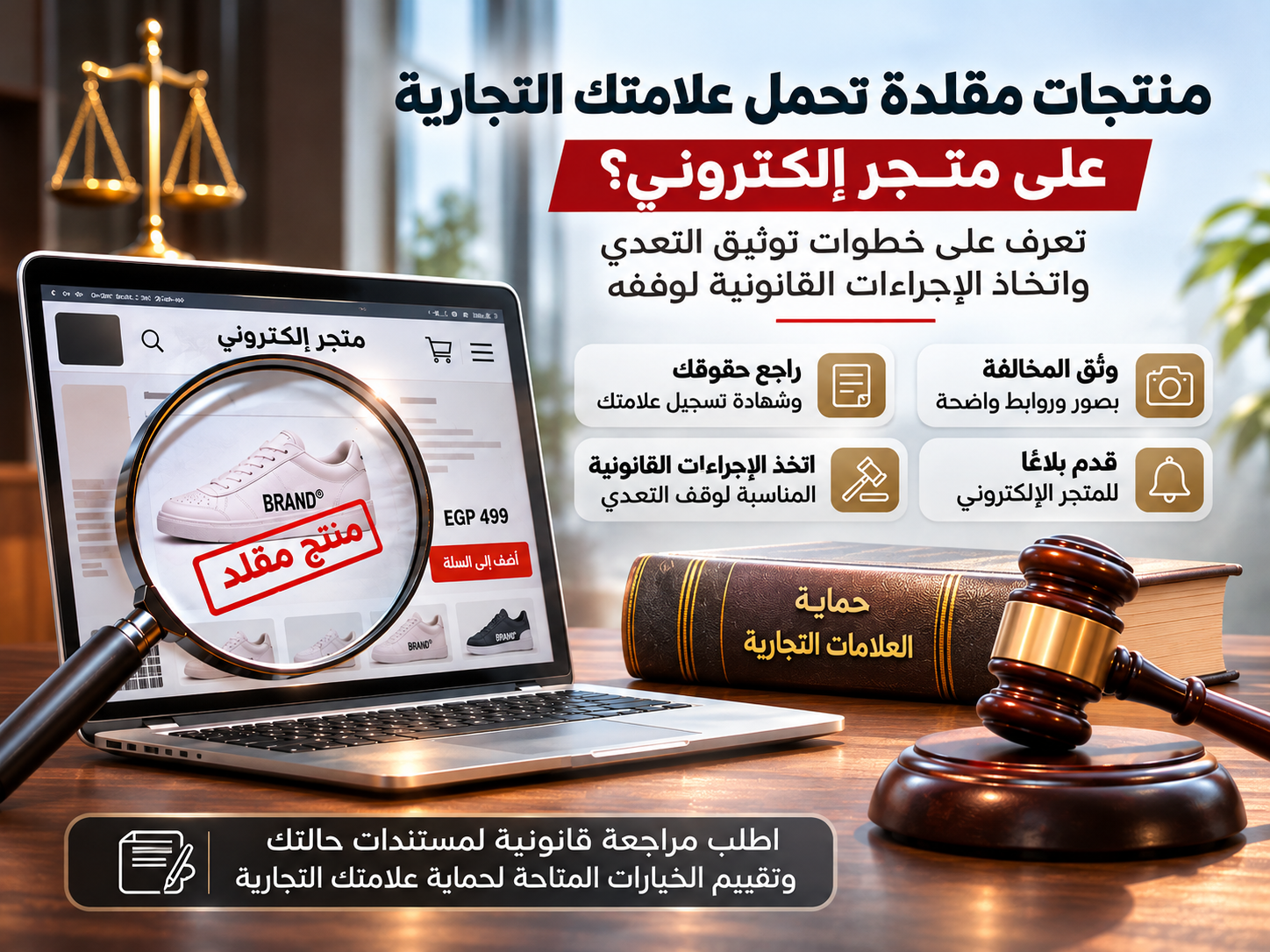
Discovered Counterfeit Products Using Your Trademark Online? Here's What to Do#
A business may spend years developing its trademark, building customer trust, and establishing a strong market presence, only to discover that an online store is selling products bearing its brand name or logo without authorization.
Trademark infringement can take several forms, including counterfeit goods, fake social media accounts impersonating legitimate businesses, unauthorized advertising, or former distributors continuing to use a trademark after their contractual rights have expired.
These activities can create confusion among consumers, damage a company's reputation, and result in financial losses.
However, discovering unauthorized trademark use does not automatically establish a legal violation. The first step is to identify the nature of the activity, preserve evidence, verify trademark rights, and determine the appropriate legal response.
When Does Trademark Use Constitute Infringement?#
Not every use of a trademark by a third party constitutes infringement.
For example, a retailer may legitimately use a trademark to identify genuine products being resold. In contrast, another seller may use the same trademark to market counterfeit goods or falsely suggest an official relationship with the trademark owner.
Determining whether infringement has occurred depends on several factors, including the similarity between trademarks, the nature of the products, the likelihood of consumer confusion, and whether the seller has authorization to use the mark.
In Egypt, trademark protection is primarily governed by Intellectual Property Rights Protection Law No. 82 of 2002, as amended.
Article 113 addresses certain offenses involving the counterfeiting or imitation of registered trademarks, their unauthorized use in bad faith, and dealing in goods bearing counterfeit trademarks under specified legal conditions.
Accordingly, trademark owners should carefully assess the circumstances before initiating legal proceedings, particularly when the dispute involves genuine products or former distributors.
How Can You Document Counterfeit Products and Collect Evidence?#
Proper documentation is essential when discovering suspected trademark infringement on an online marketplace.
Trademark owners should preserve relevant evidence before contacting the seller or requesting the removal of the disputed listings, as online content may subsequently be modified or deleted.
Important evidence may include:
Screenshots of product listings showing the trademark, logo, product description, price, and seller information.
Direct URLs linking to infringing products, advertisements, and seller accounts.
Dates and times when the suspected infringement was identified.
Trademark registration certificates and documents establishing ownership.
Purchase invoices and samples of suspected counterfeit products, where lawfully obtainable.
Previous distribution agreements, licensing contracts, and relevant correspondence.
In significant disputes, obtaining formal legal documentation of the infringement may provide stronger evidentiary support than relying exclusively on screenshots.
A qualified legal professional can help determine which evidence-preservation procedures are appropriate under Egyptian law.
Can Counterfeit Products Be Removed from Online Marketplaces?#
Many e-commerce platforms provide intellectual property complaint mechanisms that allow trademark owners to report suspected infringement.
These procedures generally require the trademark owner to identify the protected mark, provide ownership information, specify the allegedly infringing listings, and explain the nature of the violation.
However, submitting a complaint does not guarantee immediate removal.
Platforms typically review complaints according to their intellectual property policies and the supporting evidence provided.
It is also important to distinguish between removing an online listing and resolving the underlying legal dispute.
The removal of counterfeit products from a marketplace does not necessarily eliminate potential liability or prevent the trademark owner from pursuing available legal remedies.
What If a Former Distributor Continues Using Your Trademark?#
Trademark disputes involving former distributors require particular attention because the parties may have previously maintained a legitimate commercial relationship.
A distributor may have been authorized to use the trademark under a distribution agreement or licensing arrangement but continued using it after the relationship ended.
In such circumstances, the relevant agreement should be reviewed to determine the scope and duration of the authorization, termination provisions, remaining inventory rights, and obligations concerning marketing materials and trademark use.
The termination of a distribution agreement does not automatically mean that every subsequent reference to the trademark is unlawful.
The legal assessment depends on the contractual provisions, the nature of the products, and the manner in which the trademark is being used.
Where appropriate, a formal legal notice may be issued requesting the cessation of unauthorized activities before further proceedings are considered.
What Legal Actions Are Available Against Trademark Infringement in Egypt?#
When there is sufficient evidence of suspected trademark infringement, several legal options may be available depending on the circumstances.
1. Issuing a Formal Legal Notice
A trademark owner may send a legal notice identifying the protected rights, describing the alleged infringement, and requesting that the responsible party cease unauthorized activities.
Such notices may also request the removal of misleading advertisements or product listings.
2. Seeking Precautionary Measures
Article 115 of Egyptian Intellectual Property Rights Protection Law No. 82 of 2002 provides for certain precautionary measures, subject to statutory requirements.
These measures may include documenting infringement, identifying relevant products and equipment, and obtaining orders for their seizure in appropriate circumstances.
Specific procedural conditions and deadlines must be observed, including requirements relating to subsequent legal proceedings.
3. Initiating Judicial Proceedings
If the infringement continues or causes demonstrable harm, the trademark owner may consider appropriate civil proceedings or criminal complaints where the legal elements of an offense are satisfied.
The appropriate course of action depends on trademark registration, the nature of the alleged infringement, available evidence, and the jurisdiction of the competent authorities.
Can Trademark Owners Claim Compensation for Counterfeit Products?#
Trademark owners may be entitled to seek compensation when the applicable legal requirements for civil liability are established.
Potential damages may include direct financial losses, provable lost profits, or harm to commercial reputation where legally recognized and sufficiently demonstrated.
However, the discovery of counterfeit products does not automatically establish entitlement to a specific amount of compensation.
A successful claim generally requires evidence of the wrongful conduct, resulting damage, and the causal relationship between them.
Relevant supporting materials may include financial statements, sales records, customer complaints, and documented commercial losses.
A legal and financial assessment can help determine whether pursuing compensation is appropriate and how the claim should be supported.
How Can Legal Consultation Help Protect Your Trademark?#
Effective trademark protection requires more than identifying an unauthorized seller.
A legal professional can examine trademark registration documents, distribution agreements, online evidence, and commercial correspondence to assess whether the disputed conduct constitutes infringement.
Legal assistance may also include preparing complaints, issuing formal notices, negotiating settlements, evaluating compensation claims, and initiating appropriate proceedings when necessary.
A structured legal approach can help businesses protect their intellectual property while avoiding unnecessary disputes or disproportionate legal expenses.
Conclusion#
Discovering counterfeit products using your trademark on an online store requires a systematic response.
Trademark owners should begin by documenting the suspected infringement, verifying their legal rights, preserving relevant evidence, and evaluating the most appropriate enforcement options.
Taking timely and proportionate action can help protect brand reputation, reduce consumer confusion, and address unauthorized commercial activities.
If your trademark is being used without authorization, seeking a professional legal review of the available documents and evidence can help you understand your rights and determine the most appropriate steps to protect your business.