1. Does Payment Automatically Transfer Design Ownership to the Company?#
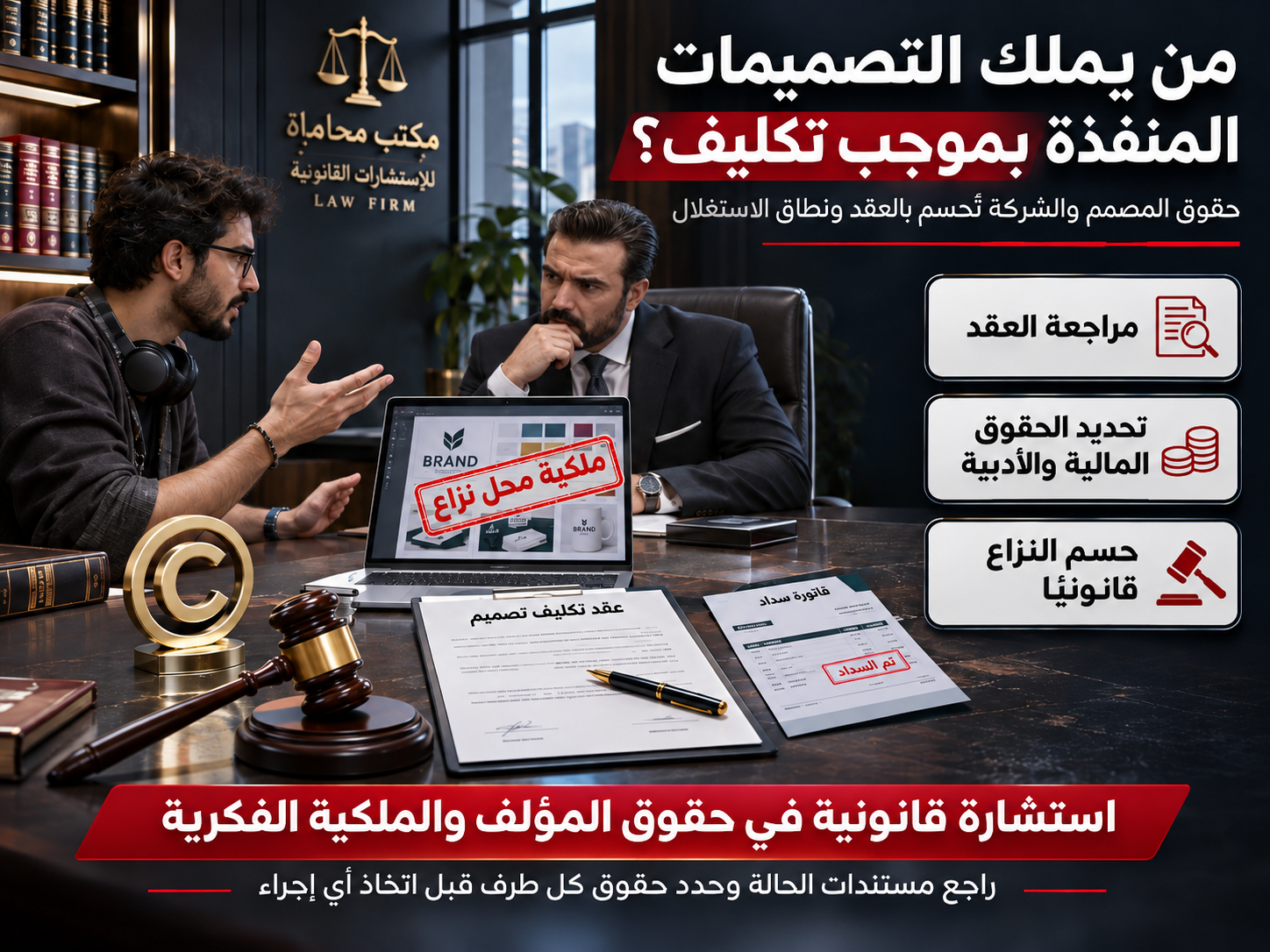
One common misconception is that paying for a design automatically grants the commissioning company complete ownership of all intellectual property rights associated with it.
Under Egyptian Intellectual Property Protection Law No. 82 of 2002, particularly Article 149, the transfer of an author's economic rights generally requires a written agreement specifying the rights transferred, their scope, purpose, duration, and geographical extent.
Therefore, payment for creative services or receipt of the final design files does not necessarily establish ownership of all economic rights.
The legal position depends on the contractual terms, the nature of the commissioned work, and the applicable legal provisions.
2. What Rights Does a Designer Retain After Completing Commissioned Work?#
Under Egyptian copyright law, designers may retain certain moral and economic rights in their original creative works, provided those works qualify for legal protection.
Moral Rights
Moral rights generally protect the personal relationship between creators and their works. These include the right to be identified as the author and certain rights to object to modifications that may harm the creator's reputation or integrity.
Economic Rights
Economic rights concern the commercial exploitation of creative works. These rights may be transferred or licensed to another party through a legally valid agreement.
It is important to distinguish between:
Ownership of Design Files: Possession of original or final design files.
Economic Exploitation Rights: The right to reproduce, distribute, publish, or commercially exploit the design within the agreed scope.
Moral Rights: Personal rights connected to the creator that receive separate legal protection.
Understanding these distinctions is essential when determining whether a designer or commissioning company has the legal authority to use a particular work.
3. When Can a Company's Use of a Design Become a Legal Violation?#
Disputes frequently occur when a company uses commissioned creative work beyond the scope of the original agreement.
For example, a designer may authorize the use of a visual design for a specific advertising campaign. The company may subsequently decide to use the same design on commercial products, across additional campaigns, or in other markets.
Whether such use constitutes an infringement depends on the contractual agreement and the economic rights granted to the company.
If the agreement limits the purpose, duration, or geographical scope of use, exceeding those restrictions may create contractual liability or copyright infringement concerns.
Therefore, businesses should carefully review licensing terms before expanding the commercial use of commissioned designs.
4. How Can Ownership of Commissioned Designs Be Established?#
Resolving an ownership dispute typically requires reviewing the documents and evidence relating to the original assignment.
Relevant evidence may include:
Design contracts and creative service agreements.
Emails and correspondence outlining the original project requirements.
Original design files and records of their creation and delivery.
Invoices and payment confirmations.
Copyright assignment agreements or licensing documents.
Evidence showing how the disputed work has been commercially used.
These documents help establish the parties' contractual obligations, the intended scope of use, and whether any intellectual property rights were validly transferred.
However, the evidentiary value of each document depends on the circumstances and applicable legal requirements.
5. What Legal Options Are Available to Resolve the Dispute?#
The first step in resolving a commissioned design ownership dispute is to conduct a legal review of the contract and supporting documentation.
This review helps determine the rights held by each party and whether the disputed use falls within the agreed authorization.
Negotiated Settlement
In some situations, the parties may resolve the disagreement by negotiating additional licensing terms, extending the permitted scope of use, or agreeing on compensation for further commercial exploitation.
A written settlement can also clarify future rights and prevent similar disputes.
Legal Proceedings
Where negotiations fail, the affected party may consider appropriate judicial procedures to protect its rights or seek compensation, subject to the applicable legal requirements.
The appropriate legal strategy depends on the available evidence, the contractual relationship, and the nature of the alleged infringement.
6. How Can Legal Consultation Protect Designers and Businesses?#
Specialized intellectual property legal services play an important role in preventing and resolving disputes involving commissioned creative works.
Legal professionals can assist with reviewing design agreements, determining the scope of transferred economic rights, assessing potential copyright infringements, and negotiating settlements.
They can also help businesses and designers prepare clear contractual provisions covering ownership, licensing, modification rights, commercial exploitation, and permitted reuse.
Establishing these terms before beginning a creative project can significantly reduce the risk of future disagreements.
Conclusion#
Ownership of commissioned creative works is not determined solely by payment or delivery. It depends on the nature of the work, contractual arrangements, and the applicable provisions of Egyptian intellectual property law.
For businesses and designers alike, clearly documenting copyright ownership and commercial usage rights is essential to protecting their legal and financial interests.
If you are facing a dispute over ownership of a design or creative work, request a professional legal review of your contracts and supporting documents to assess your legal position and identify appropriate options for protecting your intellectual property rights.