
What Happened?#
On November 16, 2026, Egypt’s House of Representatives gave final parliamentary approval to amendments to certain provisions of Electricity Law No. 87 of 2015.
The legislative discussions addressed stricter penalties, improved energy efficiency, and consumer protection.
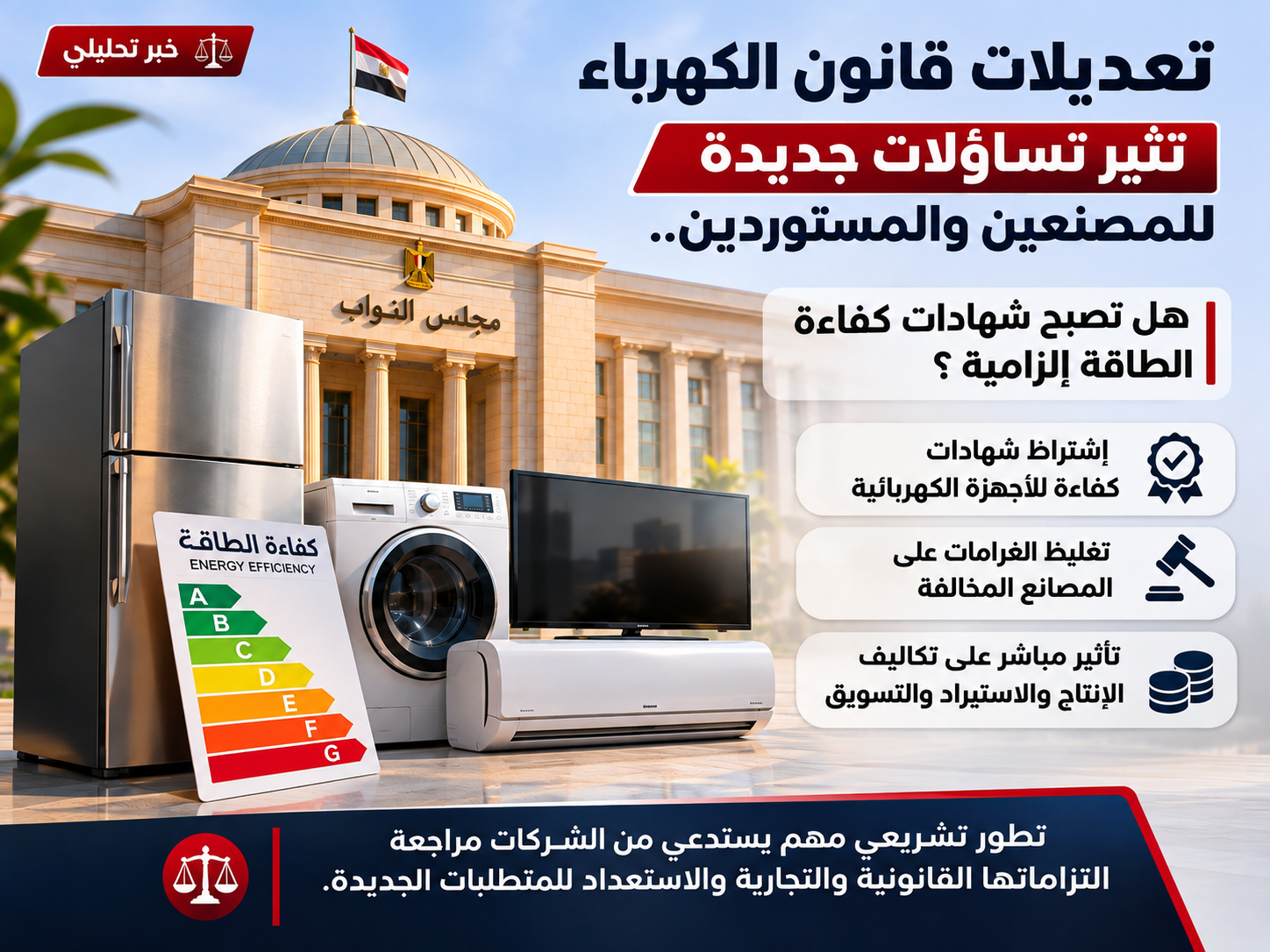
In statements published on November 17, 2026, Member of Parliament Irene Saeed highlighted proposals concerning energy efficiency certificates for electrical appliances and stricter penalties targeting non-compliant manufacturers rather than consumers.
However, parliamentary approval does not necessarily mean that every proposed requirement has immediately entered into force. The final published legislation and applicable implementing regulations must be reviewed to establish the precise obligations.
Why Do These Developments Matter to Businesses?#
The potential introduction or expansion of energy efficiency certification requirements could significantly affect manufacturers, importers, and distributors of electrical appliances.
Businesses may need to reassess product compliance procedures, technical documentation, supplier agreements, and certification expenses.
For manufacturers, additional requirements could influence production processes and quality assurance systems. Importers may face increased documentation obligations and potential changes to product approval procedures.
These developments also raise important questions about liability, enforcement mechanisms, and the financial consequences of regulatory non-compliance.
What Legal and Commercial Risks Should Companies Consider?#
Companies operating in affected sectors should carefully evaluate several areas:
Regulatory compliance: Determining whether existing products meet applicable energy efficiency standards.
Contractual obligations: Reviewing supplier and manufacturing agreements to establish responsibility for product certification and technical compliance.
Financial exposure: Assessing potential certification costs, administrative expenses, and penalties.
Operational planning: Preparing for possible changes to product approval, importation, and distribution procedures.
Legal liability: Understanding how future implementing regulations may allocate responsibility among manufacturers, importers, and distributors.
The precise scope of these obligations will depend on the final legal provisions and subsequent regulatory decisions.
What Should Businesses Do Next?#
Manufacturers and importers should monitor official legislative publications and regulatory announcements while reviewing their existing compliance frameworks.
An early legal assessment can help businesses identify contractual weaknesses, evaluate regulatory exposure, and develop practical compliance strategies before new requirements become applicable.
Professional legal advisory services can also support companies in reviewing commercial agreements, understanding regulatory obligations, and managing potential disputes arising from product certification requirements.
Conclusion#
Egypt’s Electricity Law amendments represent an important legislative development for businesses operating in the electrical appliances sector.
Although the full practical implications depend on the officially published legislation and implementing regulations, manufacturers and importers have an opportunity to assess their compliance readiness and prepare for possible regulatory changes.
For businesses, understanding these developments is not simply a legal consideration; it is also an important part of financial planning, operational risk management, and long-term commercial stability.


